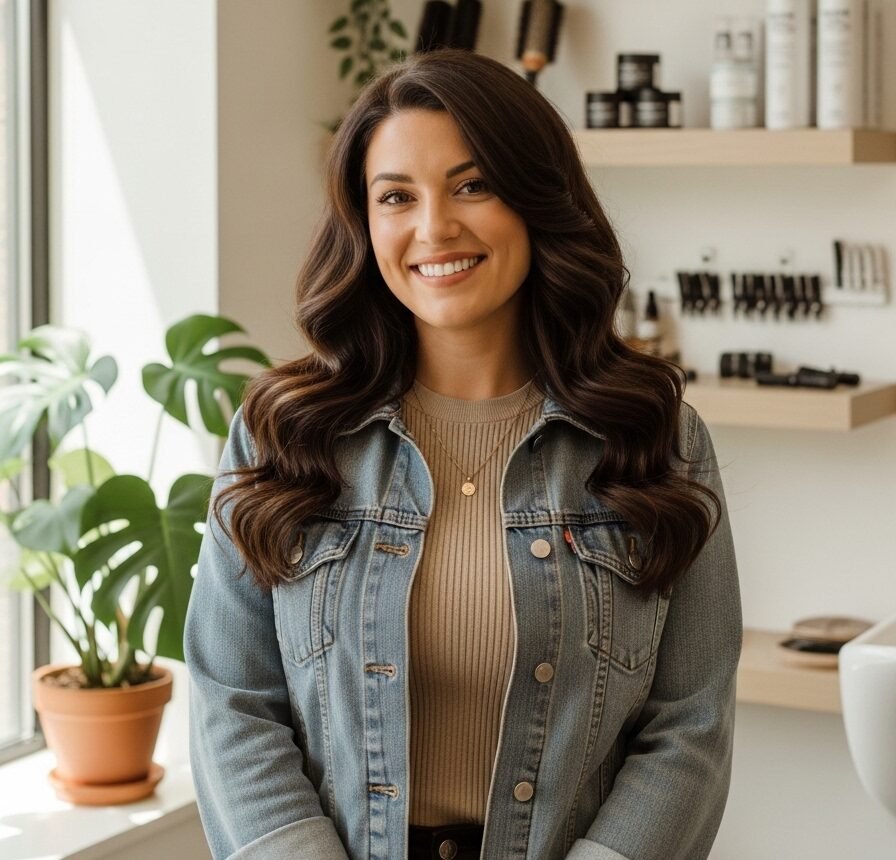
I stared at my own gray roots in a bathroom mirror once and thought I needed to hide them. What I really needed were softer edges and the right products. I learned the hard way that heavy dye and one-size-fits-all purple shampoo do more harm than help. Below are real, lived-in techniques I use and teach friends to make gray and silver sit together without obvious lines or crunchy texture.
These ideas mostly serve fine to medium 1A through 3B hair that wants a softer gray blend, with notes for thicker textures where needed. Expect mostly 10 to 30 minute steps you can do at home, with two salon-only options worth the price. Budget ranges span under $15 for touch-ups to one tool splurge around $150.
Soft Root Smudge With a Demi Gloss
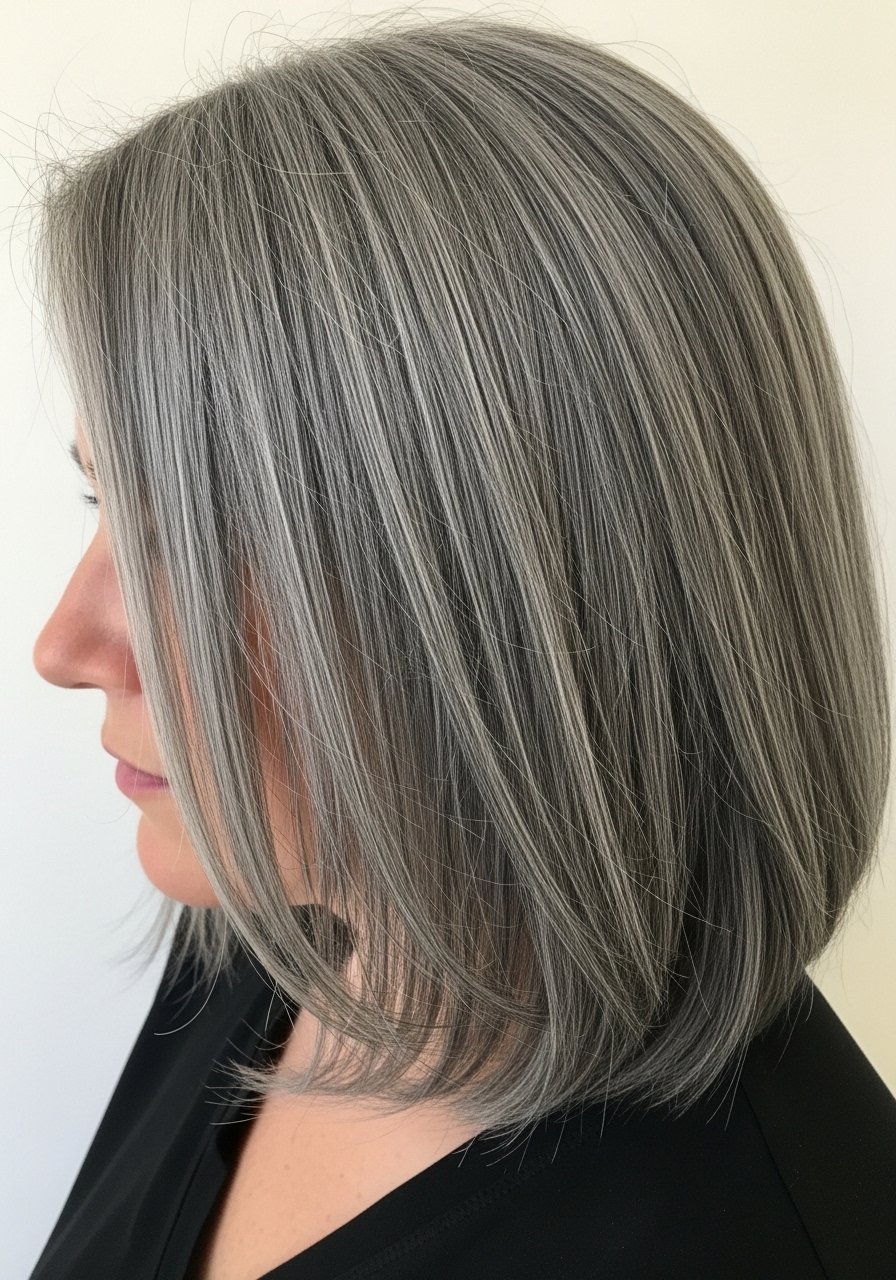
A demi gloss smudge at the root softens the stark line between pigmented hair and silver. For fine to medium straight hair, I ask for a demi that is one shade darker than my silver and ask the stylist to apply with a 1/4 inch soft brush, feathering outward in two passes. At home, a color-depositing glaze like a 6oz clear gloss mixed with a pea-sized amount of a tone-on-tone pigment works if you follow manufacturer timing, usually 10 minutes. The result is a lived-in gray with no harsh band. Common mistake, asking for full permanent lift, which creates contrast. Salon application is safer for dramatic changes. Allergy patch test is a must for any pigment.
Money Piece Face-Framing Balayage With Soft Edges
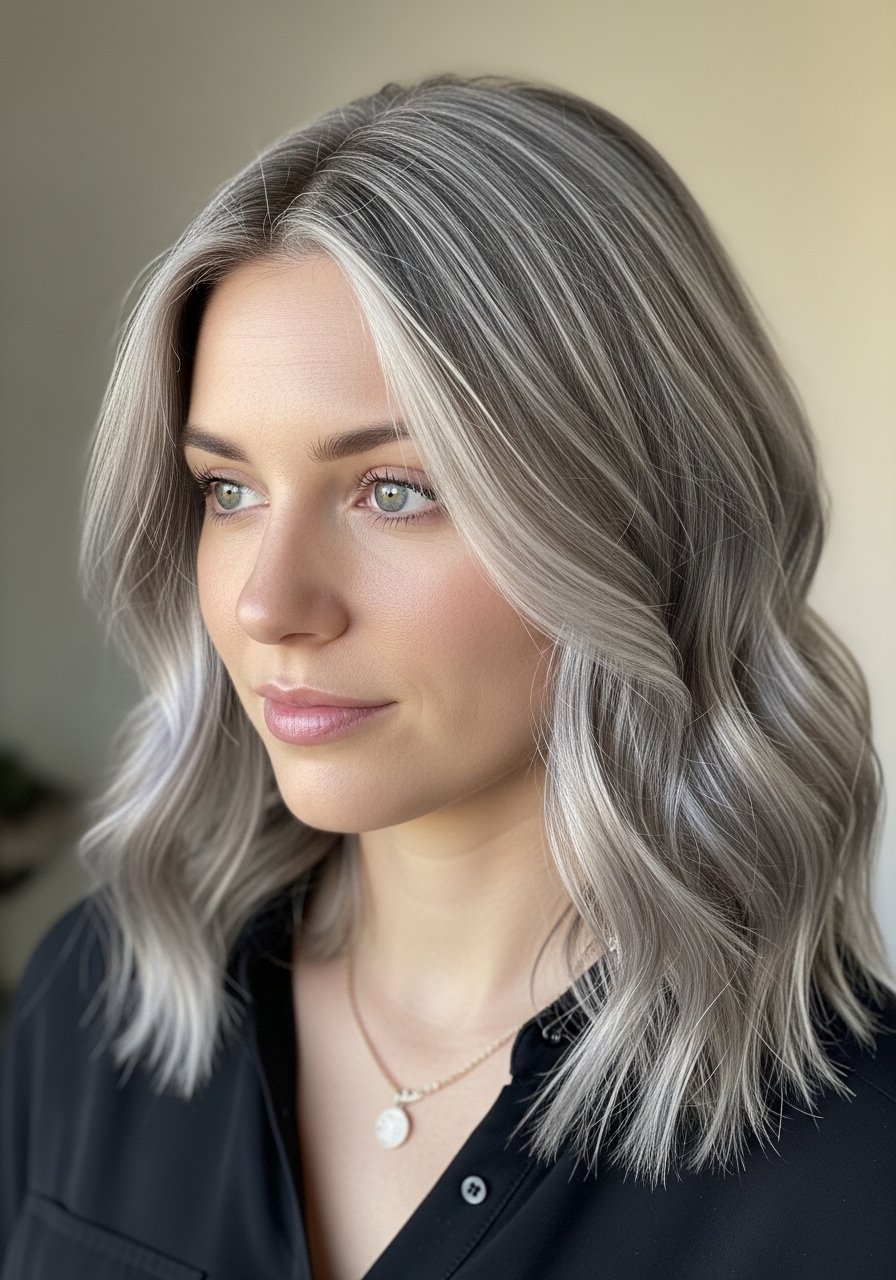
A soft money piece gives the illusion of intentional highlights without erasing natural gray. For 2A to 3B waves and medium density hair, request a balyage where the lighter streaks are painted with a 70/30 hair-to-bleach ratio at the front, glossed with a violet-neutral toner at 6 to 8 minutes to avoid brass. I have a friend with thin hair who uses smaller, thinner sections, about 1/8 inch, to keep the look soft. DIY touch-ups are possible with a color-depositing conditioner in small amounts. Mistake, bringing photos of high-contrast celebrity looks. Those need frequent salon maintenance. If you go lighter, protect the scalp if using a higher lift product.
Blending With a Color-Depositing Conditioner
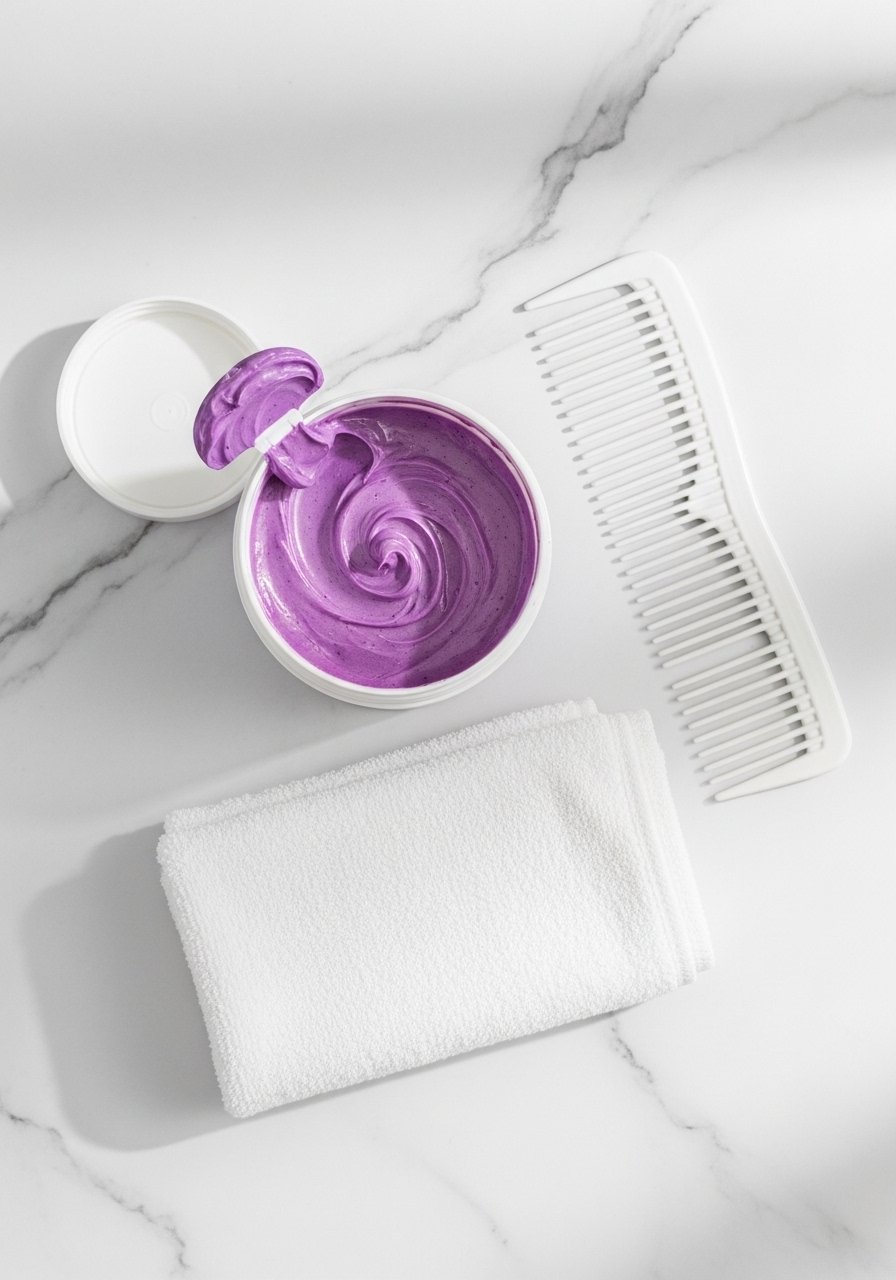
Color-depositing conditioners are the easiest at-home way to neutralize brass and warm tones in silver hair. Use one 1 to 2 times per week, leave on for 3 to 5 minutes, then rinse. For fine hair, 2 minutes is usually enough. I keep a 6oz jar in the shower and mix half a pump into my regular conditioner for a subtler result. The problem people run into is daily use turning hair purple or drying it out. Rotate with a moisturizing conditioner and skip if your scalp is sensitive. If you want a stronger tone, a weekly mask with 10 minutes processing works better than daily small amounts.
Micro Highlights at the Hairline For Soft Contrast
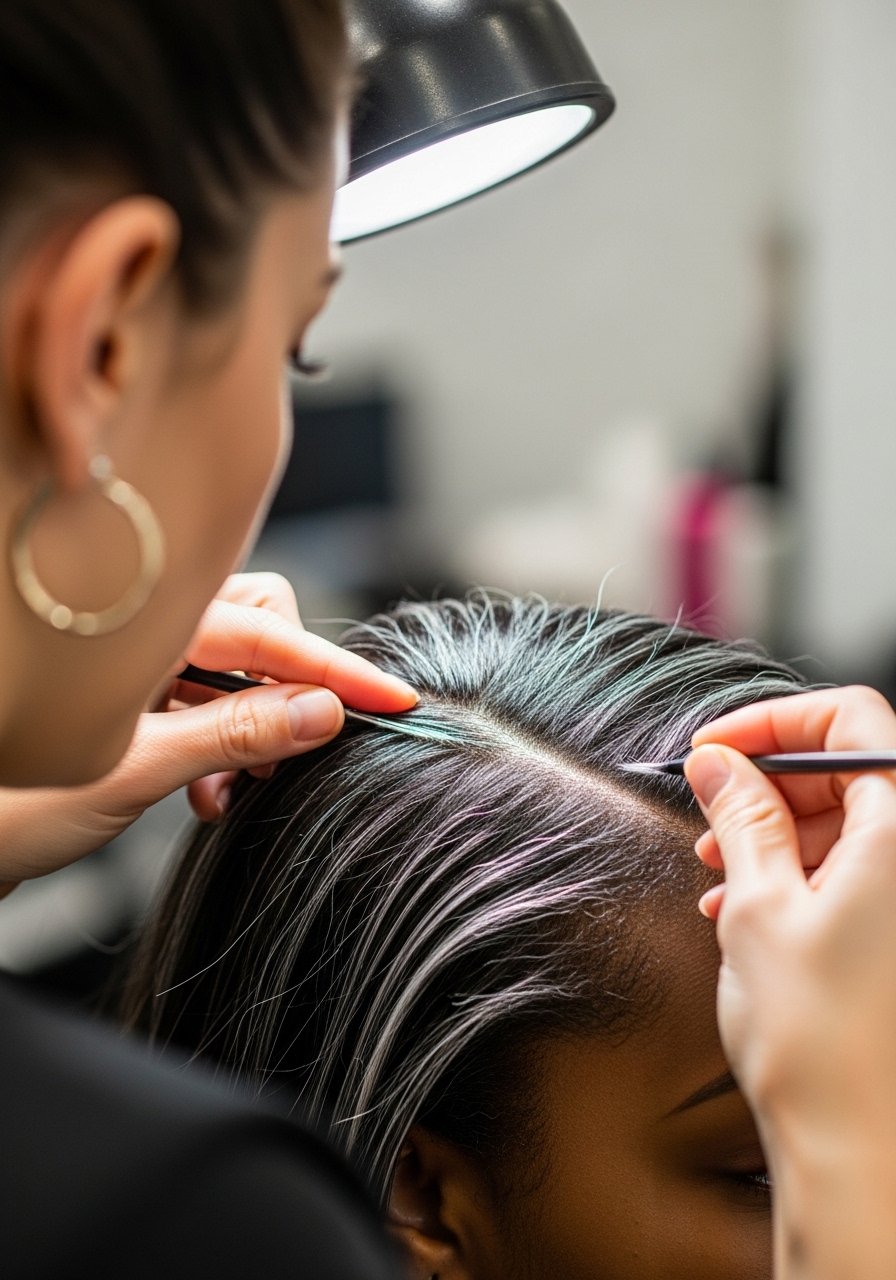
Micro highlights at the hairline break up a high-contrast grow-out without touching the midlengths. This fits fine to medium density hair and works well for shorter bobs where big foil highlights look obvious. Ask for slices no wider than 1/16 to 1/8 inch, painted with a low volume developer so lift is gentle. Time in foil should be watched closely, usually under 20 minutes depending on your base. Common mistake, painting thick foils that look chunky. Salon application is recommended for precision. If you DIY, use a single slice and a 10 volume developer test strand first. Remember, bleaching over previous lifts increases break risk.
Silver Blending With a Gloss and Low-Maintenance Toner
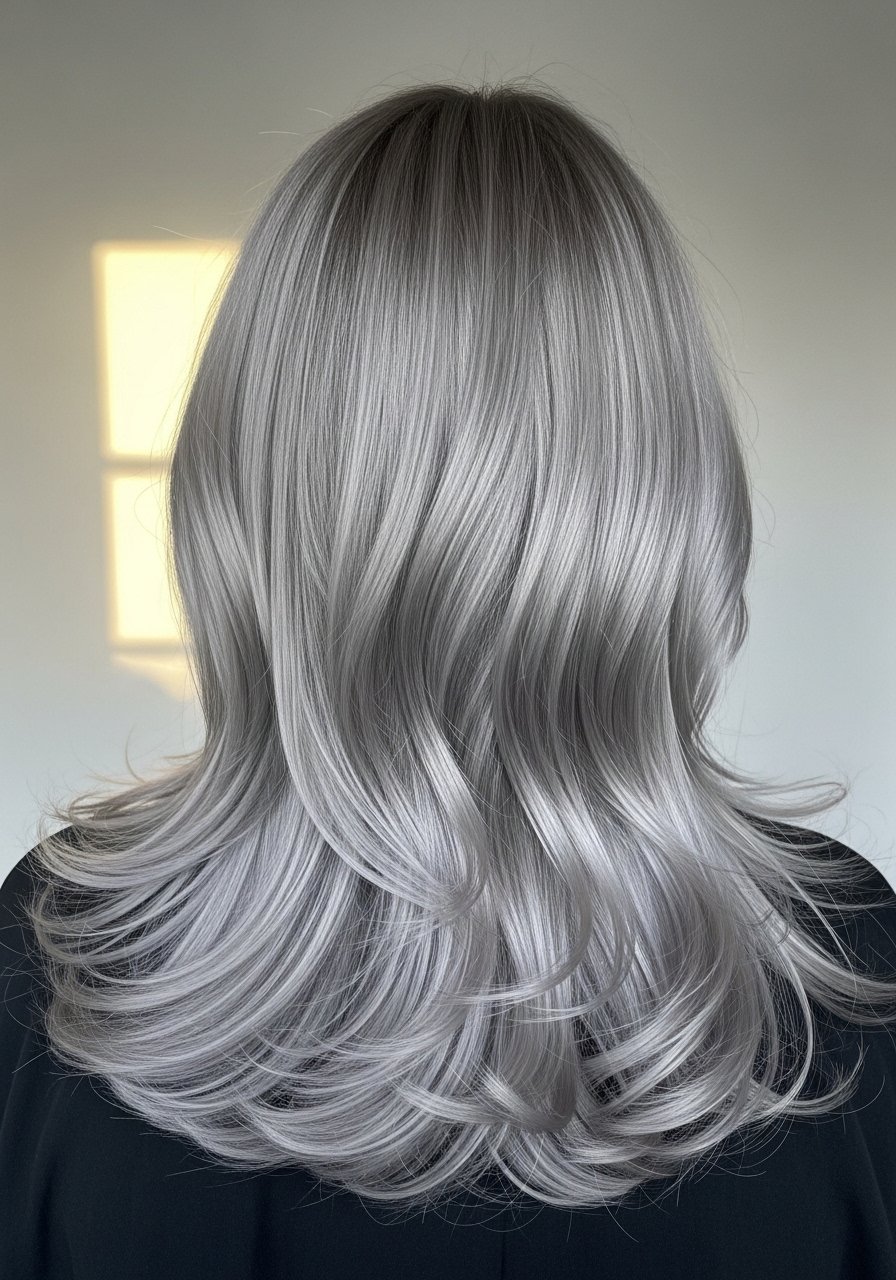
A clear or tinted gloss will bind pigments and smooth the surface, making silver appear reflective not flat. I do a quick at-home gloss twice a month to keep silver luminous. K18 and similar bond builders can be used before glossing if hair feels fragile. Use gloss at the recommended time, often 5 to 10 minutes. The gloss also helps with gray that looks metallic by adding a tiny warm or cool shift. Mistake people make, over-toning with purple shampoos and expecting gloss to fix texture. Gloss adds surface shine, it does not deeply repair. If your hair is porous, apply a warm towel for five minutes after glossing to increase penetration.
Rooty Balayage Touch-Up With a Powder Color
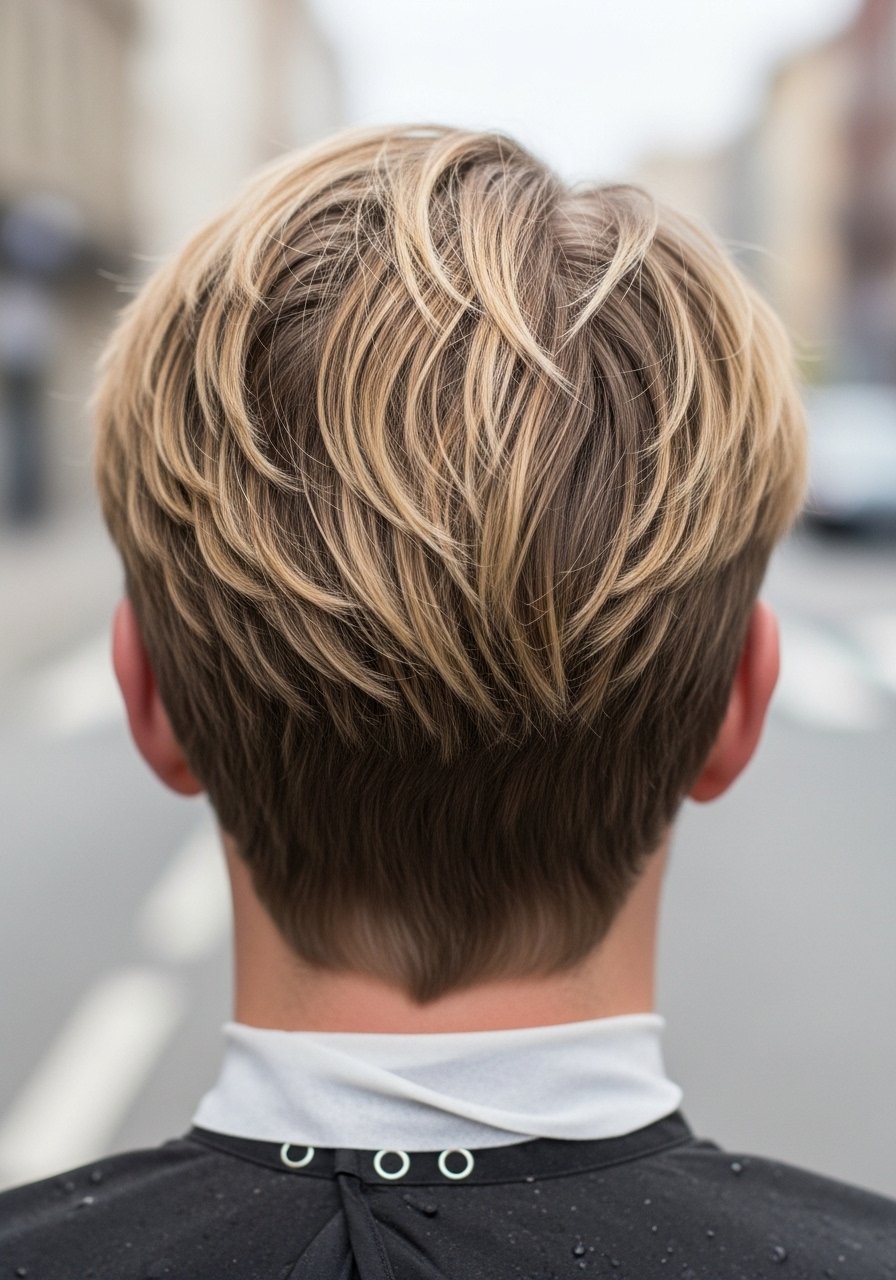
If you hate weekly root touch-ups, a rooty balayage keeps gray and coloresque at the same time. Use a powder color or cream shadow on the regrowth line to soften contrast for up to two weeks. I use a micro applicator and blend with a dry sponge in three quick sweeps to mimic natural shadow. Works on straight to wavy hair and medium to thick textures. The downside, it is temporary and washes out. Mistakes include applying too much pigment so the root seems painted in. This is a cheap DIY stopgap that pairs well with a gloss appointment every six to eight weeks.
Scalp-to-Ends Waxing For Soft Texture And Less Brassy Shine
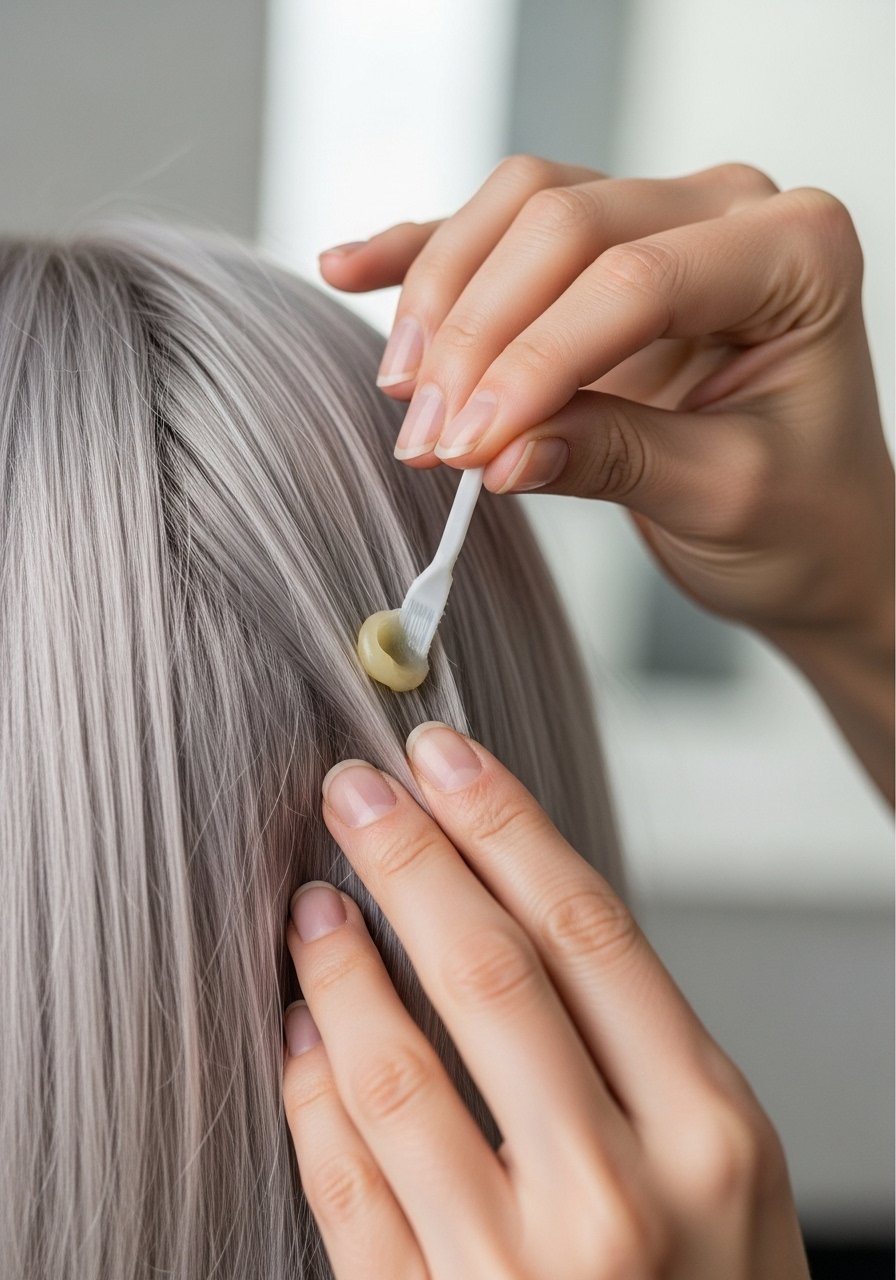
Tiny amounts of a light styling wax on the midlengths and ends can tame flyaways around silver strands that otherwise read harsh. I rub a pea-sized amount between my palms, then lightly press and twist through the ends. For finer hair use a rice-sized amount. This works well on 1A to 2C textures to give a lived-in softness without stiffness. Common mistake is using too much wax near the roots which makes gray look greasy. A quick tip, warm the wax in your hands so it spreads. If your scalp is oily, avoid root application. This is strictly a styling trick, not a product that changes color.
What I Keep On The Shelf To Blend Silver

This small shelf list is what I actually reach for when I want gray to look deliberate not accidental.
- A 5oz purple-tinted color-depositing conditioner for occasional use, under $20, stash in the shower. A color-depositing conditioner
- A 6oz demi gloss or glaze for monthly glossing sessions. If buying Olaplex or K18, buy from the official store on Amazon or Sephora to avoid counterfeits. Olaplex No.3 hair perfector
- A small micro applicator brush for smudging roots at home, less than $8. A micro applicator brush pack
- A silk pillowcase queen size under $30 to reduce friction overnight. A silk pillowcase
- A lightweight styling wax for ends control, 1 to 2oz jars are perfect for travel. A light hair wax
- A root shadow powder for quick touch-ups between appointments, lasts several months. Root touch-up powder
Feathered Air-Dry For Natural Silver Blending
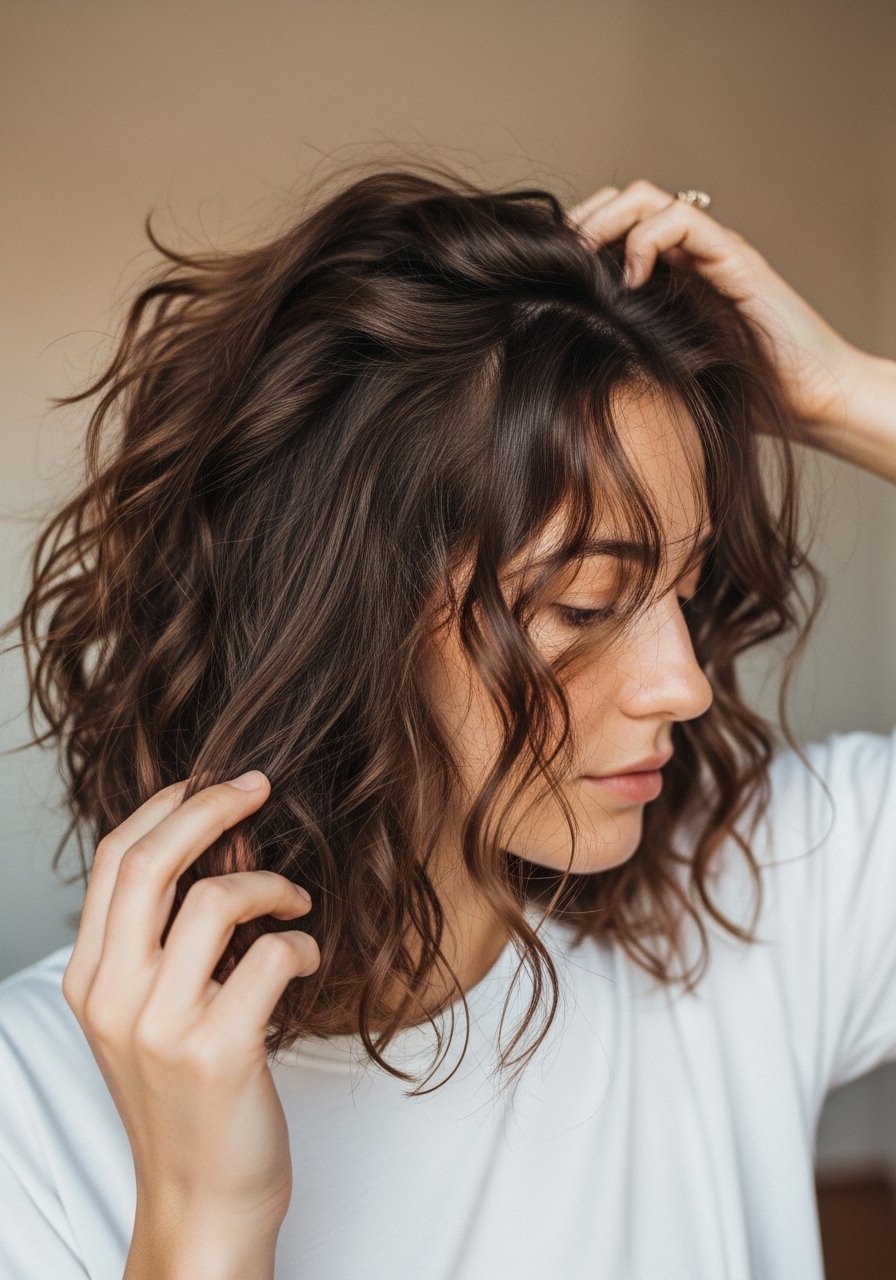
Air-drying with a feathering technique keeps silver from looking flat. After washing, towel blot with a microfiber wrap for 10 to 15 minutes. Apply a leave-in diluted at a 4 to 1 water to product ratio for low hold then scrunch. For curlier textures, use the LOC method, liquid then oil then cream, to lock moisture and define without crunch. My hair holds shape better if I plop for 20 minutes then let it hang. Mistake, piling hair on top of the head too tight which flattens face-framing gray pieces. If you want a bit more separation, two spritzes of a sea salt spray on damp hair before air-drying gives subtle texture.
Subtle Contrast With a Root Shadow Toner
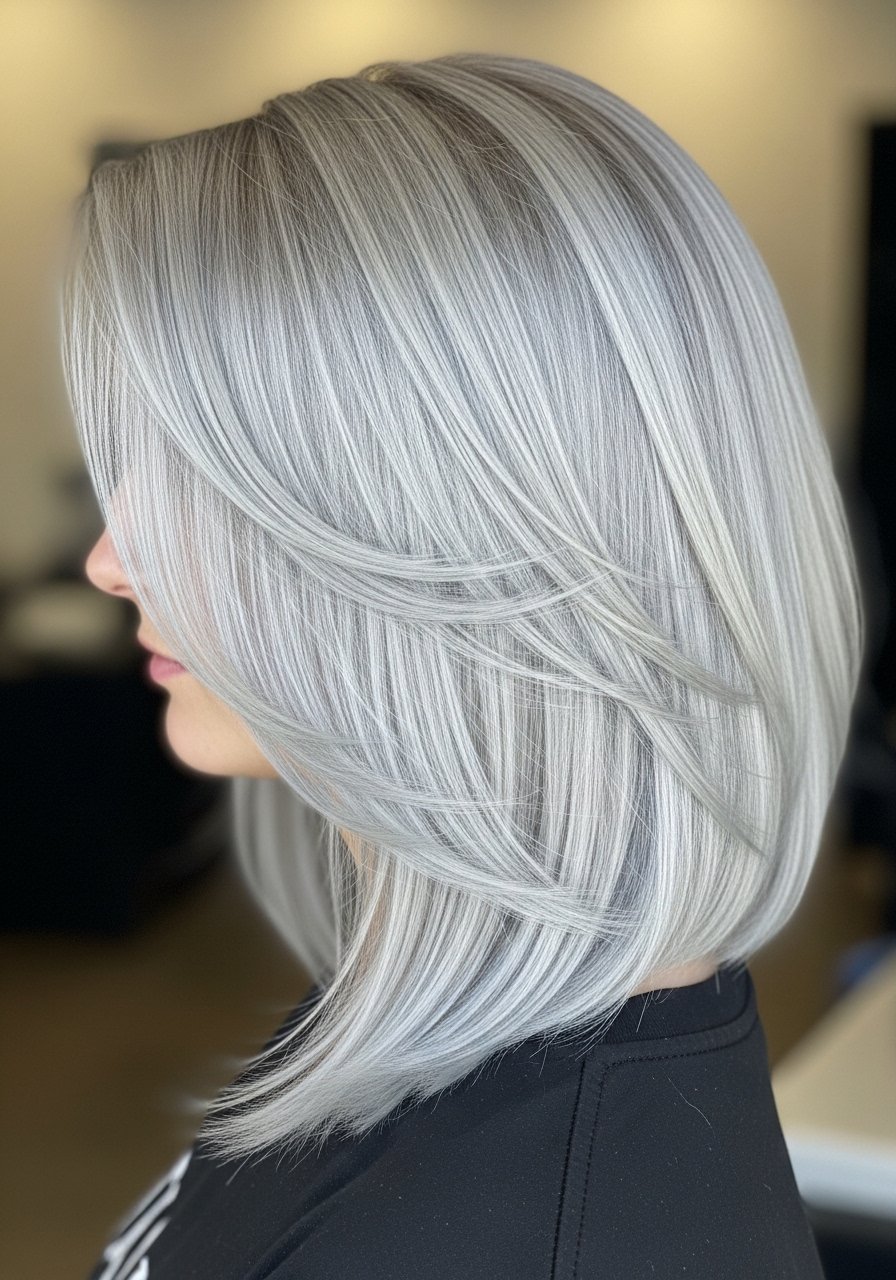
A root shadow toner is the low-effort, low-maintenance way to blend stark grays. The technique is to deposit a cooler shade on the first inch to inch and a half of regrowth with a cream toner, usually left on for 5 to 8 minutes depending on porosity. This suits straight to wavy hair and medium thickness best. I tell friends to avoid leaving it longer because the root can read too warm. DIY kits work but if you have a contrasty base, a stylist will use a feathering brush and small sections for a softer gradient. Safety note, always patch test and avoid overlapping heavy lifts.
The Heat Finish That Keeps Silver From Looking Brassy
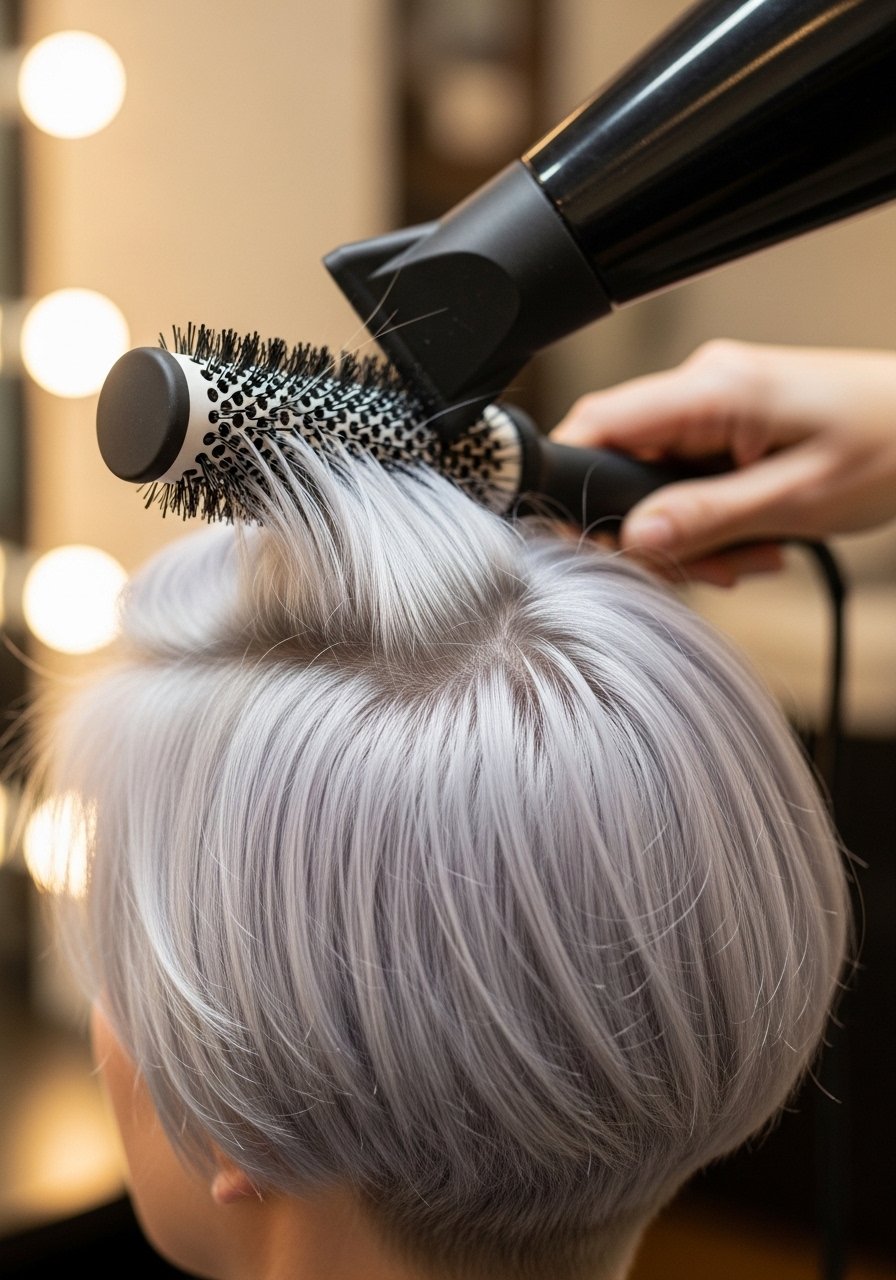
If you use heat, do it smart. Heat protectant before any iron over 300F is essential. For fine to medium hair, a 300 to 350F flat iron setting smooths without frying. Finish with a cool blast and a mist of anti-humidity spray over the surface, not at the roots. I use a denser round brush for lift at the root and a paddle brush for smoothing midlengths. Common mistake, blasting hot heat straight on wet hair. Always towel blot until damp and apply heat protectant. If your hair is brittle from past color, use lower heat and more passes rather than one very hot pass.
The Mistakes I Made So You Don't Repeat Them
*

- Over-bleaching to chase a photo. I bleached in one go once and paid to fix it. If you need major lift, accept multiple sessions.
- Purple shampoo every wash for months. A friend did that and her hair became dry and gummy. Stick to once a week.
- Flat ironing without a proper protectant. Heat protectant before any iron over 300F, always.
- Treating gray like a mistake to be covered. Soft blending looks more intentional and counts as style.
Grab a reliable heat protectant that absorbs on damp hair. A lightweight heat protectant helps keep silver reflective not fried.
Frequently Asked Questions
Q: Can I use a purple shampoo every wash to keep my silver bright?
A: No. Purple shampoo once a week is usually enough. Overuse can dry hair and leave a purple tint. Swap to a color-depositing conditioner for controlled toning if you need more regular maintenance.
Q: Will blending techniques damage my gray hair?
A: Dyeing and bleaching always carry risk. Gentle options like demi glosses and root shadows are lower damage than repeated full lifts. If your hair is fragile, book a salon consult and consider bond builder treatments before color.
Q: How do I avoid a harsh line between dyed hair and natural gray?
A: Soft smudging at the root, micro highlights at the hairline, or a root shadow toner all diffuse the line. The technique and thin sections matter more than pigment strength.
Q: Can I do these blends at home or should I see a stylist?
A: Small fixes like color-depositing conditioners and root powders are fine at home. For bleaching, micro highlights, and big shade shifts, a salon is safer. Lifting over previous color increases break risk.
Q: How often should I gloss my silver hair?
A: Once every four to eight weeks depending on shine loss and porosity. If your hair is porous, you may need a gloss sooner. For fragile hair use lower frequency and combine with a bond builder.
Q: Is there a product that will fix metallic or brassy silver?
A: Toners and glosses tame brassiness. If hair is textured or damaged, add a bond builder before toning. Avoid over-toning with purple shampoo which can dry hair and create odd hues.