If you need short hair for kids for round face, start with the goal: reduce width at the cheeks and create vertical lines. I learned this the hard way after a blunt kid cut that made my niece look wider than she is. These looks cover straight 1B through springy 3A curls, most can be done at home with a basic kit, and budgets run from under $20 to one midrange salon visit for shaping.
Pixie With Soft Fringe For Round Faces
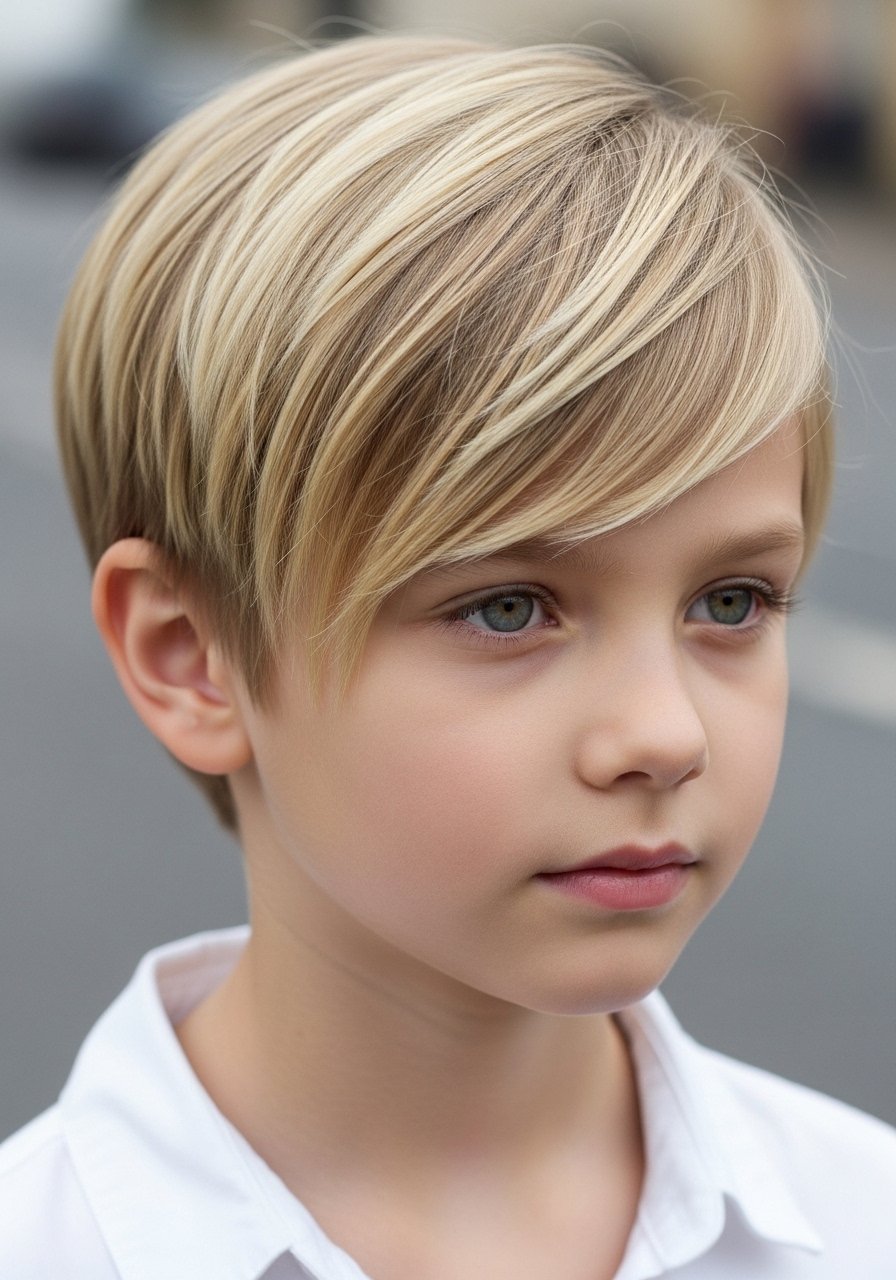
Start with a pixie because the short length at the sides visually narrows the face. The trick is a soft fringe swept slightly to the side, not blunt across the forehead. For fine hair this creates the illusion of height without looking heavy. It fits 1A to 2A hair textures and takes one 20 to 30 minute trim every six to eight weeks. Two spritzes of a lightweight texturizing spray before you finger-style gives grip. A common mistake is cutting the fringe straight and too short. Salon shaping is worth the first cut, then learning simple trims at home keeps it fresh.
Chin-Length Bob With Tucked-Behind-Ear Tip For Round Faces

A bob that hits at the chin helps create a defined jawline. Teach your child to tuck one side behind the ear or clip it for school photos. Works well on straight to loose-wave textures, and styling takes less than five minutes. I use a pea-sized amount of a detangling cream after towel drying to avoid frizz, and then smooth with a wide-tooth comb. If you blow dry, remember heat protectant before any iron over 300F. Avoid razor-thinning the ends too much. That makes the shape disappear and adds bulk around the cheeks.
Button Bob With Soft Side Part For Round Faces
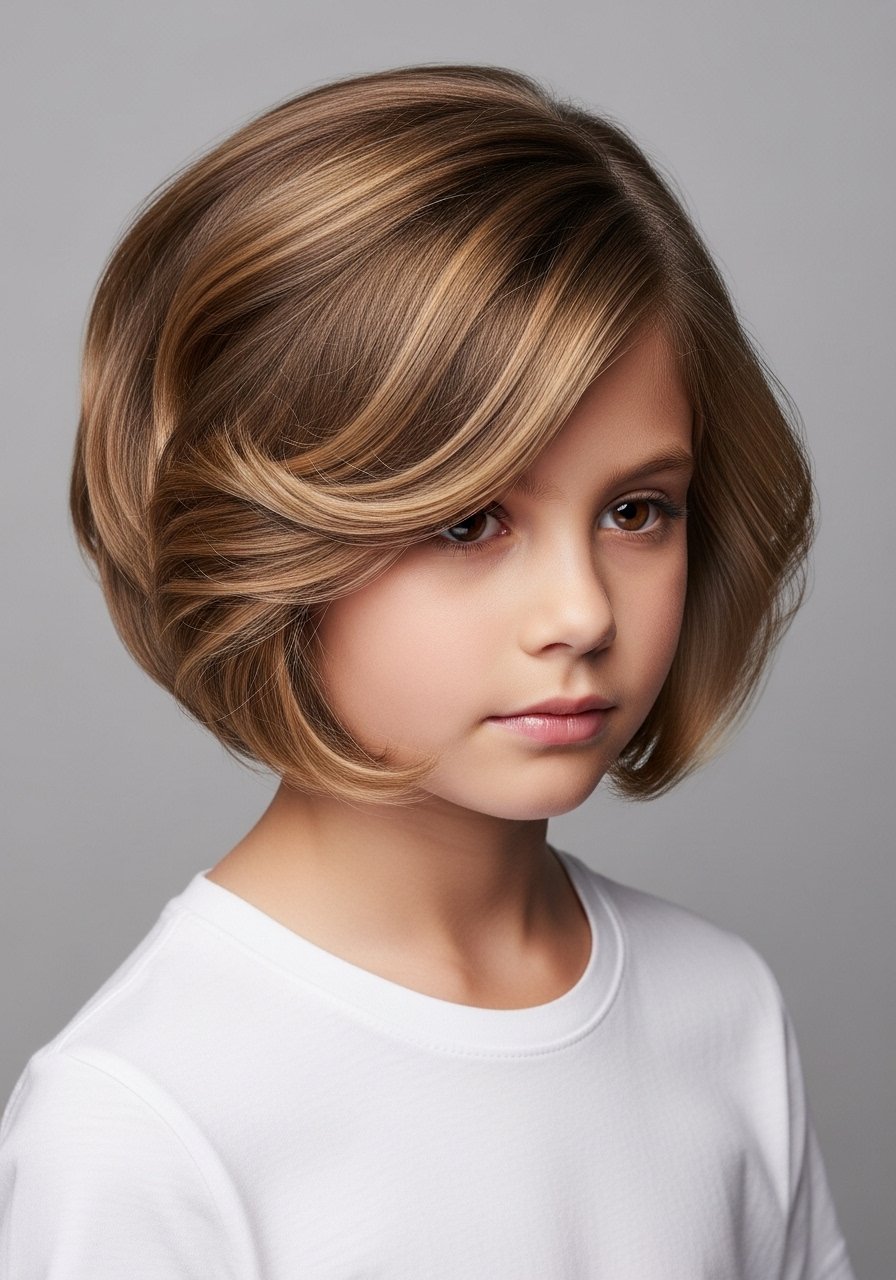
The button bob gives a balanced, lived-in look without heavy maintenance. A deep side part immediately breaks the circle of a round face. It suits medium density 2A through 3A curls, but for full curls ask the stylist to dry-shape the cut so it lands where you want it. At home, scrunch with a nickel-sized cream for curls or smooth with a brush for straighter hair. Common mistake, especially with curls, is washing then air-drying without product. That flattens shape. Add product while damp and define with fingers or a diffuser on low heat for 6 to 8 minutes.
Textured Crop To Hide Baby Cowlicks
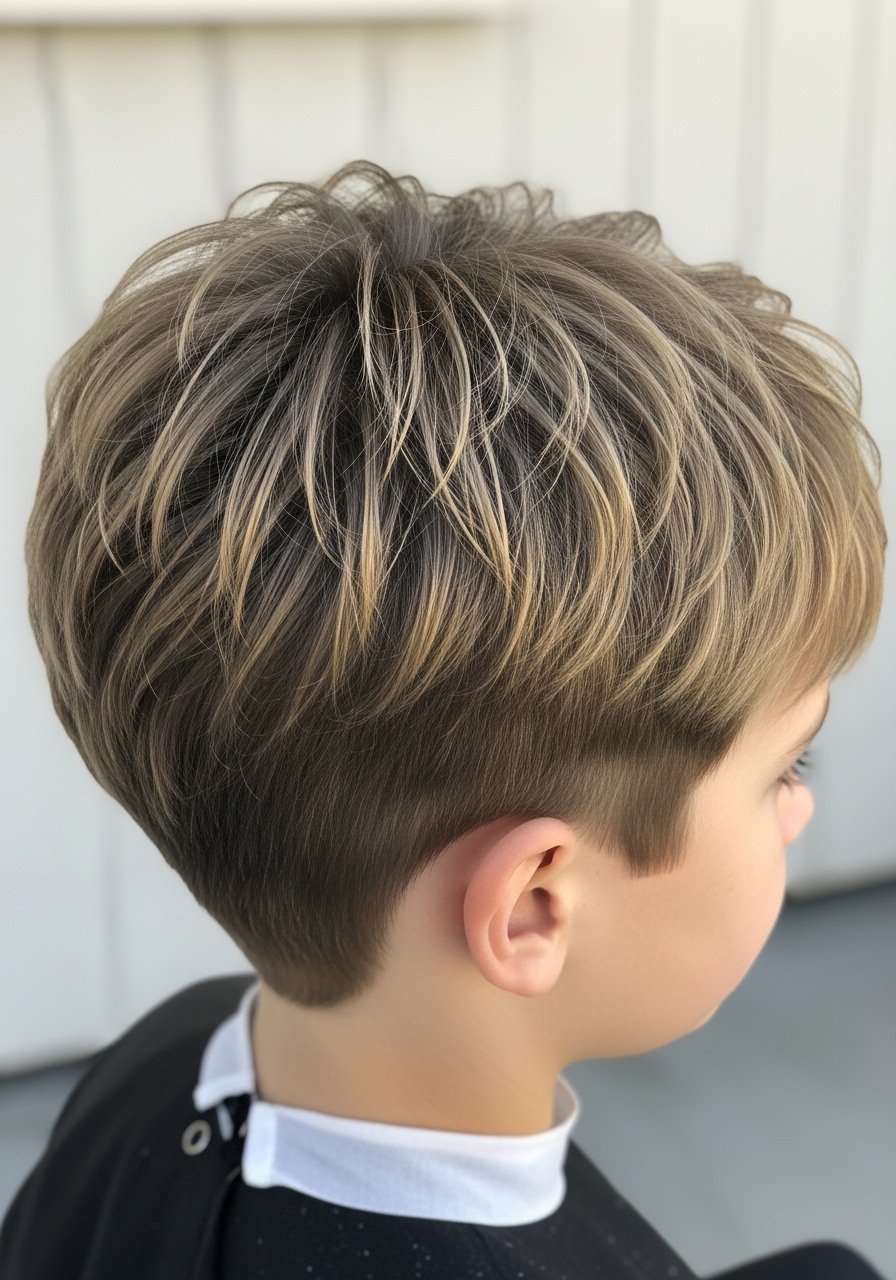
Cowlicks love short hair. I learned that clippers alone make cowlicks spike. The textured crop, cut into the crown with short layers, lets hair lay down naturally. This is best for fine to medium straight hair and takes 10 minutes to style with a dime-sized amount of styling paste. Work product through dry hair and pinch pieces to create texture. Overusing product is the classic mistake. For kids who wear helmets, keep the top slightly longer so the cowlick stays manageable after pressure from gear.
Curly Short Cut With Defined Face Frames For Round Faces
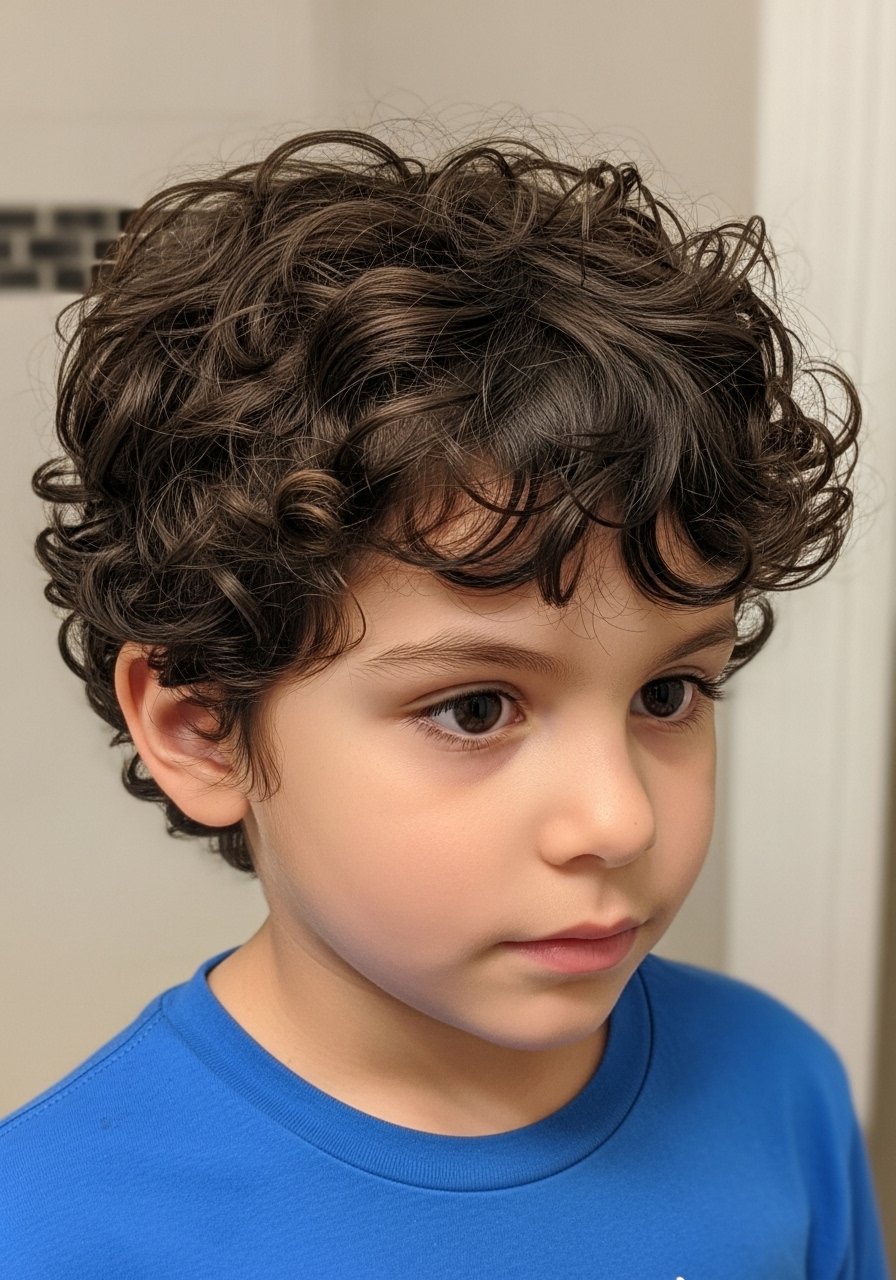
Short curly hair can widen a round face if cut all the same length. Face-framing layers that fall below the cheekbones add vertical lines. For loose 3A curls a leave-in cream applied in sections, using the LOC method makes curls hold. I usually do two sections across the crown, apply a quarter-size of product per section, then diffuse for eight to ten minutes. A common error is using gel alone. My curls looked great on TikTok and like wet noodles by 11am. Layering cream under a light gel fixed that.
Mini Shag With Wispy Ends For Round Faces
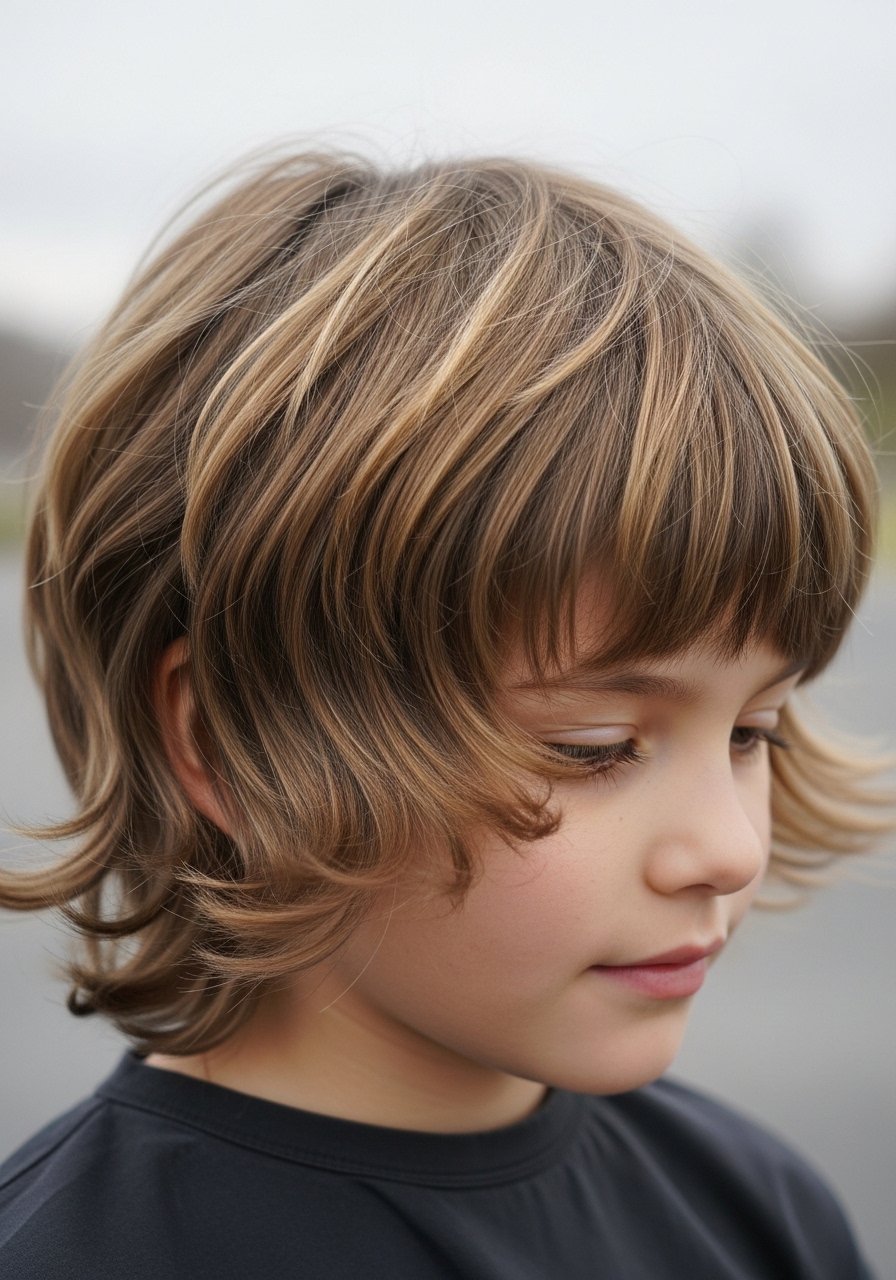
A mini shag adds vertical texture and breaks roundness. The key is soft, feathered ends not blunt chops. This cut works on 2A to 2C hair and needs a slight dry trim every 10 weeks to keep the wisps from going too heavy. A two-finger sectioning method for the bangs while trimming at home keeps them soft. Too much thinning at the crown kills the lift. If you try this at home, clip long layers in place and only trim small amounts to avoid accidental mullets.
Asymmetrical Bob To Draw The Eye Down
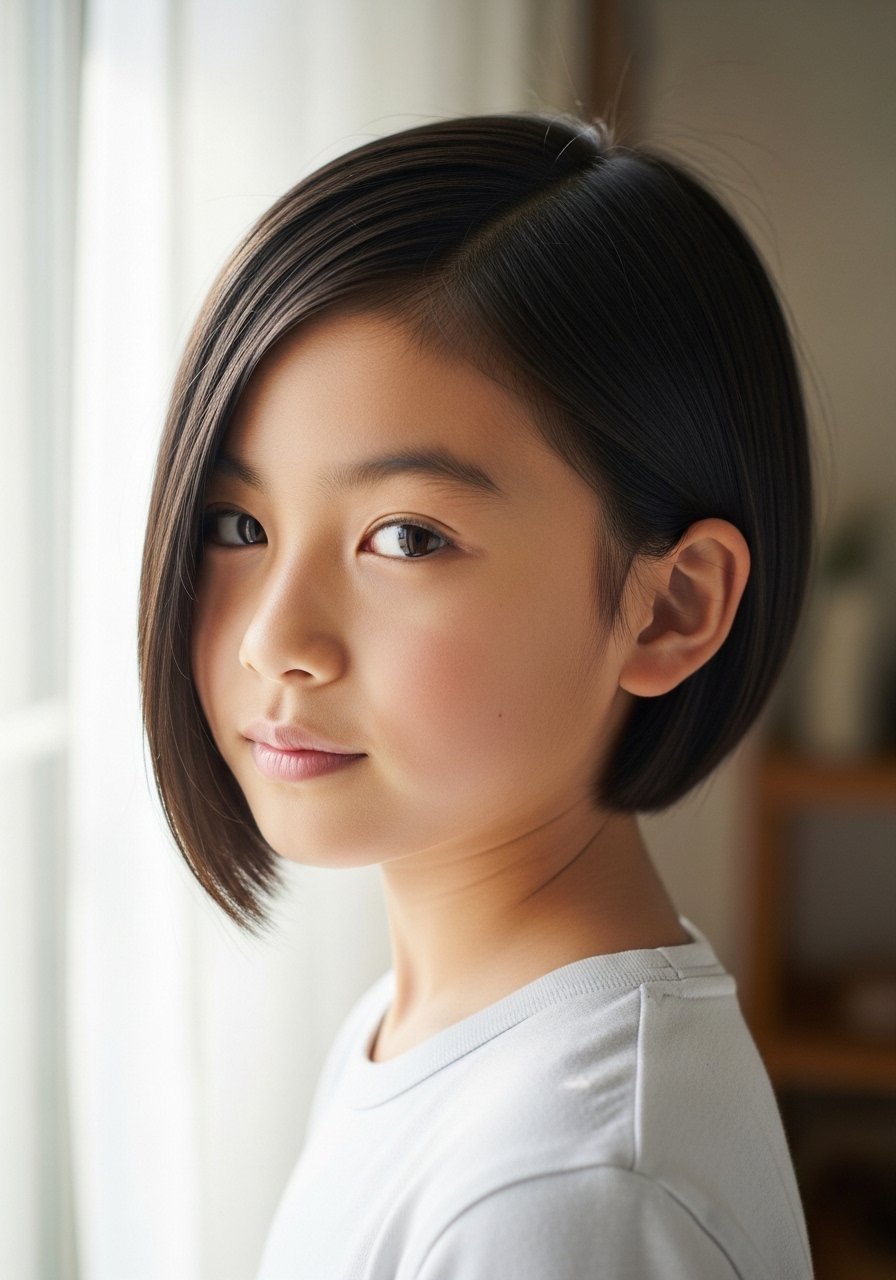
Asymmetry is a simple optical illusion. One side longer than the other swings attention down and narrows cheeks. It is low fuss on straight to slightly wavy hair and takes a single salon shaping cut, then easy trims at home. For touch-ups, comb the longer side over and trim tiny amounts. A common mistake parents make is insisting on perfect symmetry. That cancels the effect. This style is also forgiving for kids who like to play with their hair, since messiness becomes part of the look.
What I Actually Keep In A Kid’s Short-Hair Kit
- Microfiber hair towel for quick dry, cuts wet time by a third
- Wide-tooth detangling comb for wet hair, under $10
- Leave-in-detangler-spray for post-swim knots, 8oz
- Small rounded scissors for trimming kept in a safe drawer
- Lightweight texturizing-spray for crops and pixies
- Silk-pillowcase under $25, cuts morning frizz
- Gentle-sulfate-free-kids-shampoo-8oz for sensitive scalps
- Heat-protectant-spray for the occasional styling iron, apply on damp hair
- Soft-claw-clip-set for quick half-up days
- Wide-bristle-paddle-brush for smoothing longer short styles
Short A-Line Bob With Deep Side Part For Round Faces
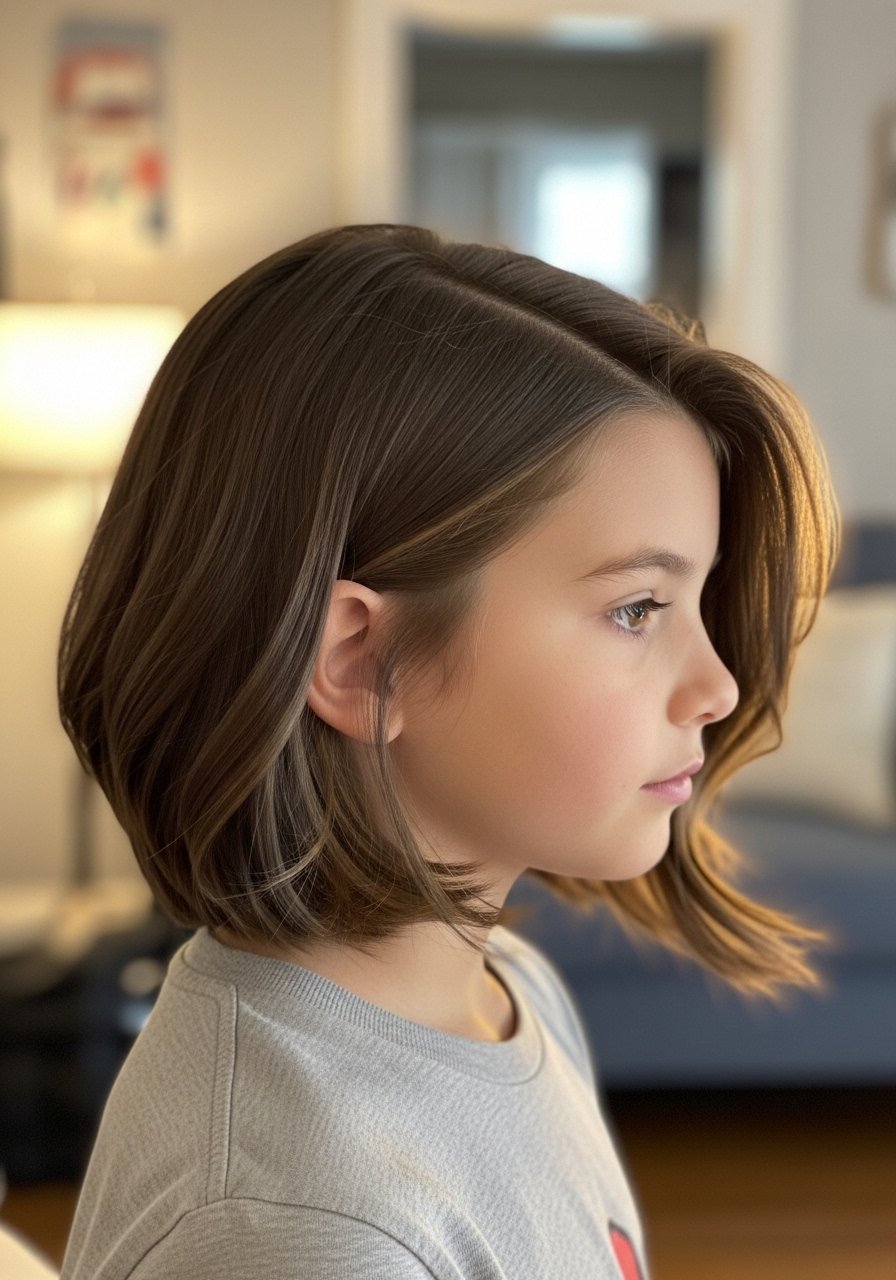
An A-line bob with a deep side part creates diagonal lines that slim a round face. Best for medium density 2A to 2B hair, the cut gives motion when hair is tucked behind one ear. I apply a nickel-sized smoothing cream on damp hair to control frizz, then air-dry for ten minutes. Avoid too much weight at the bottom. Heavy blunt ends negate the diagonal. If you want it to last, a light flat-iron pass at 300F or below keeps the angle crisp. Remember heat protectant before any iron over 300F.
Pixie With Longer Top For Playful Sculpting
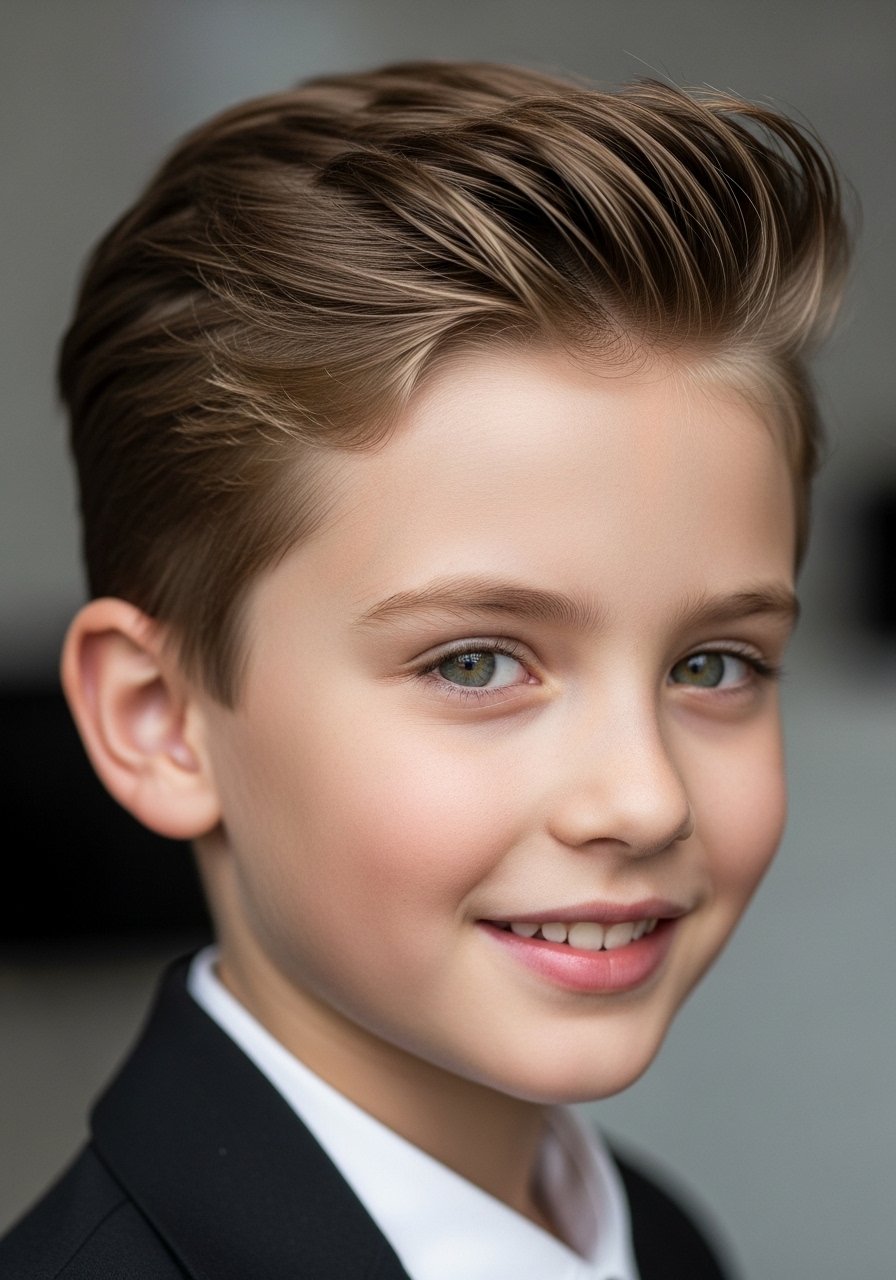
Leave the top of a pixie longer so kids can finger-style a faux mohawk when they feel dramatic. This works for straight to slightly wavy kids and only needs a quick daily tousle with a pea-sized amount of styling paste. For school, smooth it down with a soft brush and dab of conditioning spray. Too much product ruins the movement. If you use wax or paste, warm a pea-sized amount between fingers. For active kids, shorter sides prevent helmet hair and keep things safe.
Short Lob With Curtain Bangs For Round Faces

Curtain bangs that part slightly down the middle add a vertical frame that slim cheeks. On a short lob this is adorable and surprisingly low maintenance for 2A to 3A textures. Start with two thin sections when styling and use a dime-sized smoothing cream on damp hair. A common error is cutting curtain bangs too thick; they should be wispy and feathered so they fall naturally. If you plan to trim at home, snip vertically not horizontally for a softer edge.
Two Mini Buns For Play Dates
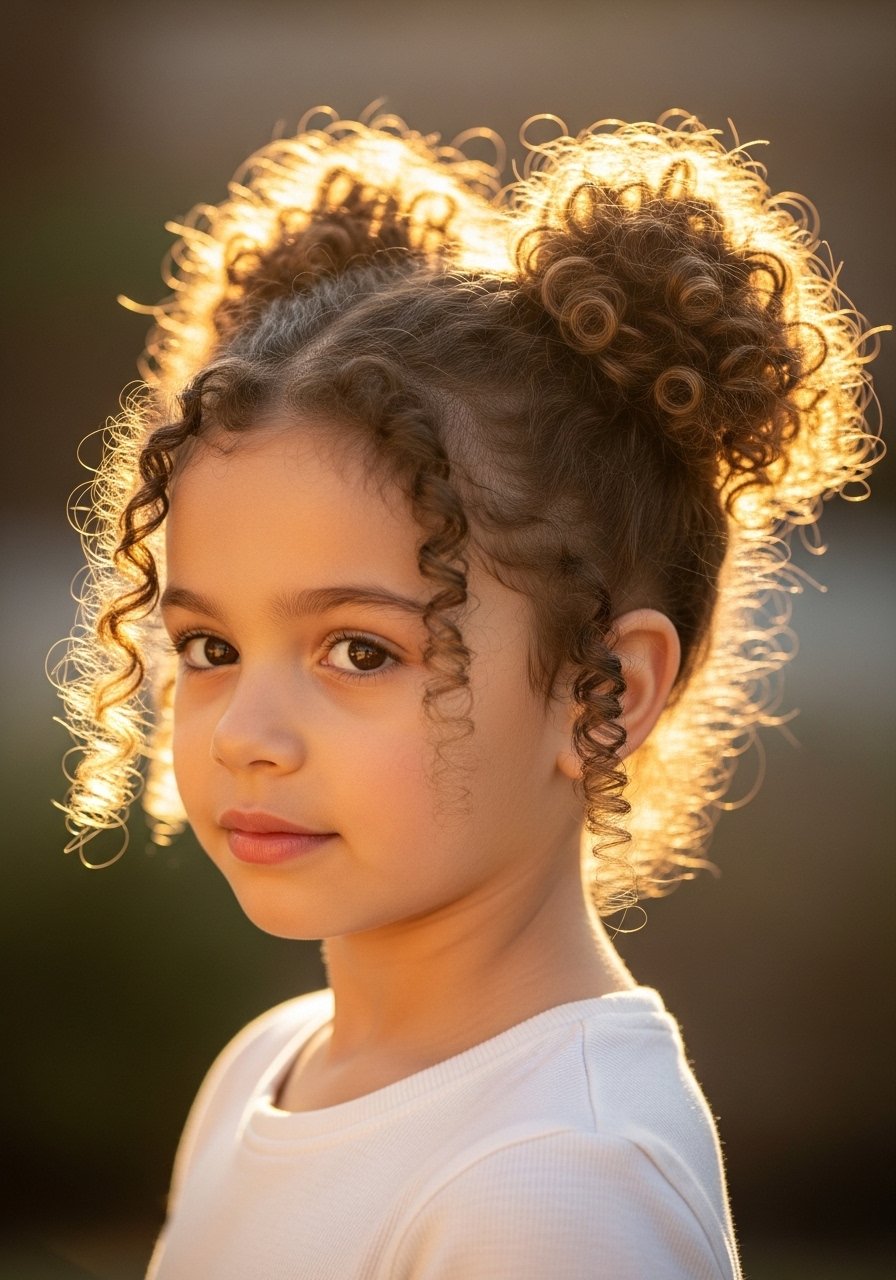
Space buns are playful and keep hair out of the face at recess. For curly hair gather two small high ponytails, twist into buns and secure with soft scrunchies. This is great for 3A to 4A kids and cuts tangles after a day of play. Don’t twist so tight that the scalp hurts or the curls kink badly. If you want a polished look for pictures, smooth the perimeter with a tiny amount of detangler. For sweaty days, rinse and reapply leave-in on the buns to prevent matting.
Short Layered Cut With Clip-In Color For Parties
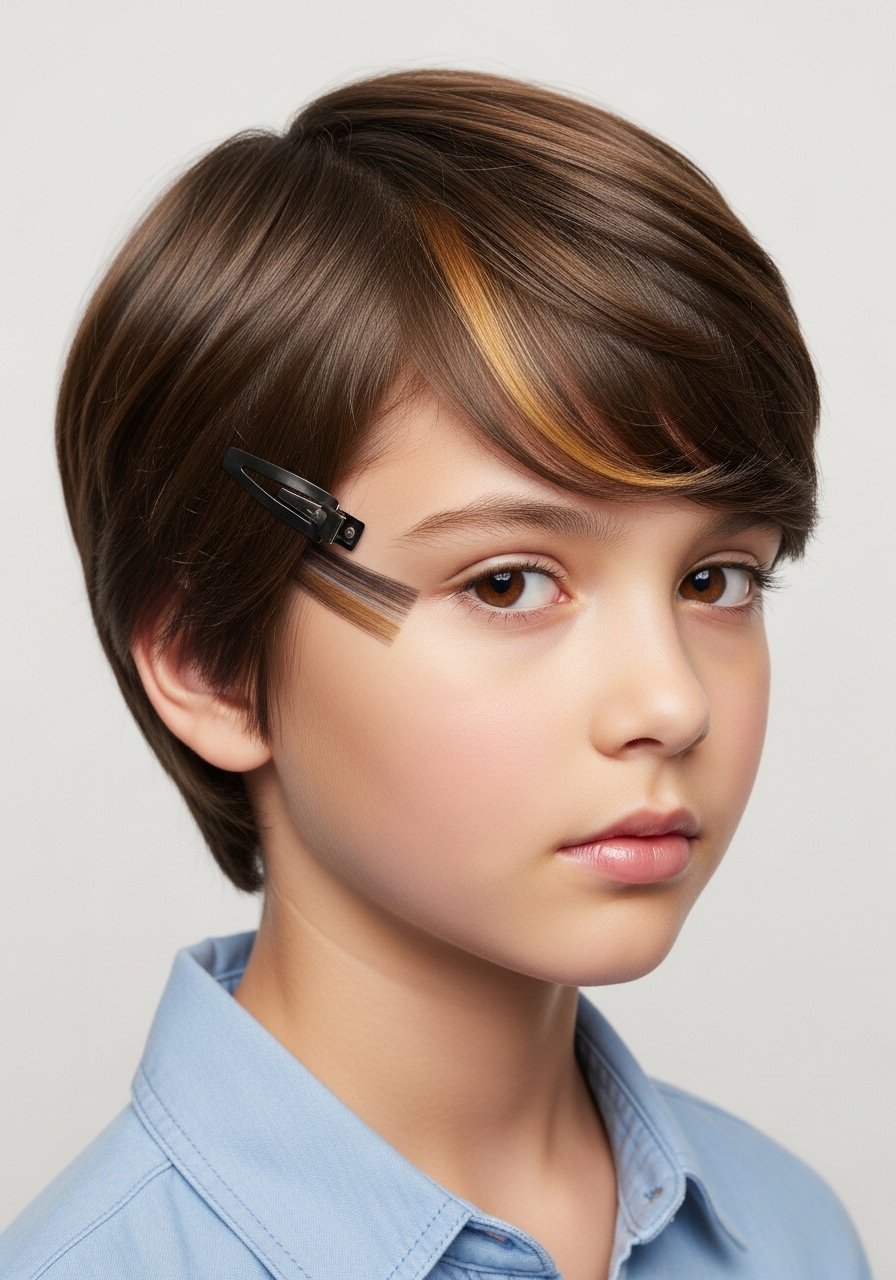
Temporary clip-in color streaks are a great way for kids to play with color without bleach. Use clip-ins or washable color chalk. Always patch test any color product on skin before use. I once tried a glitter spray that irritated a scalp, so I now test on the inner arm and small scalp area first. This look works on any texture and can be removed in one wash. If you want longer wear, use clip-ins with a silicone-lined clip. Avoid home bleaching for kids. If color needs lifting, book a salon appointment.
School Picture Short Wet Look With Styling Gel
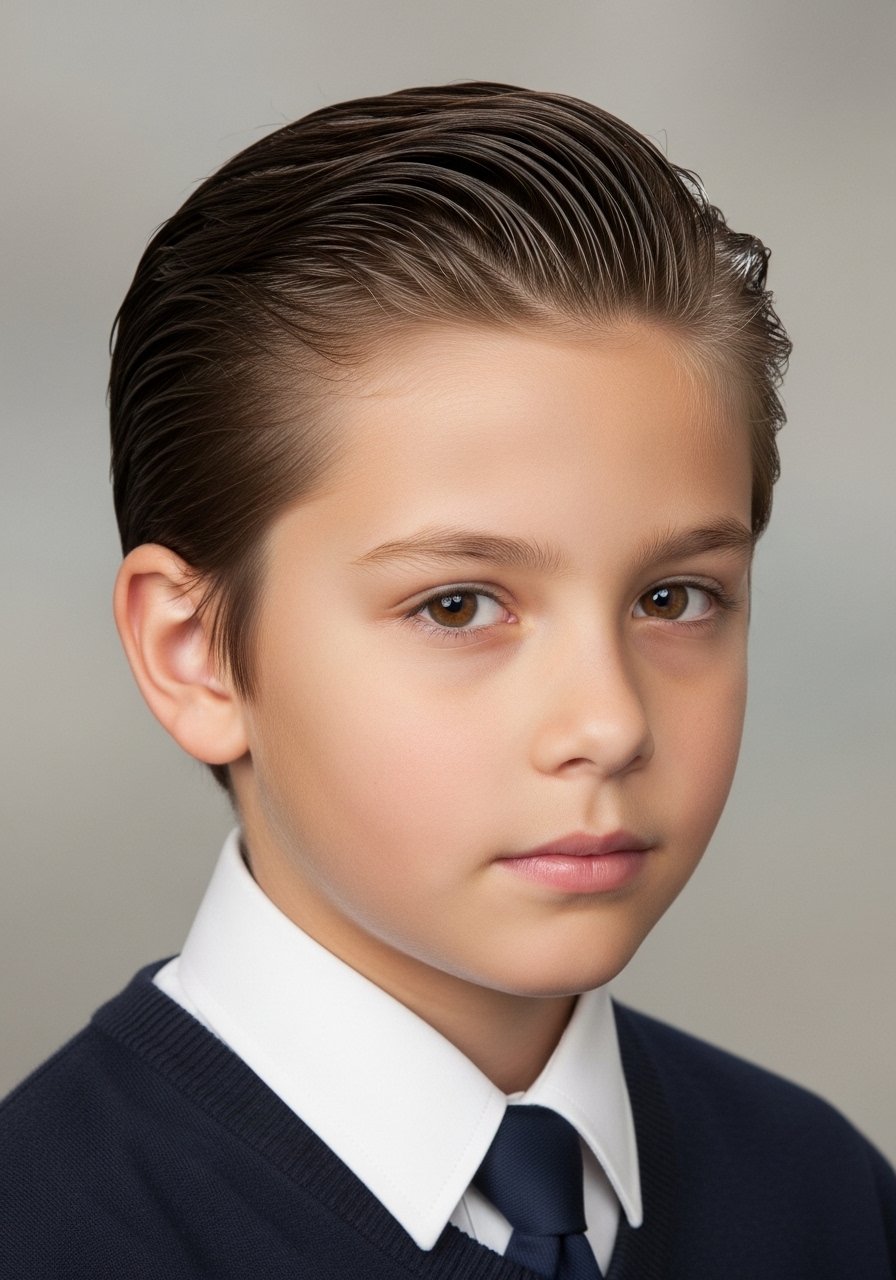
The wet look is back for kids who want a sleek finish on picture day. Use a tiny amount of a non-flaking styling gel on damp hair and comb into place. For fine hair, a pea-sized amount works. A common mistake is over-applying gel and ending up with visible residue. If you don’t like hairspray, a light mist of anti-humidity spray after styling keeps things in place. If you use heat to set the style, remember heat protectant before any iron over 300F.
Low-Maintenance Buzz Cut For Busy Families
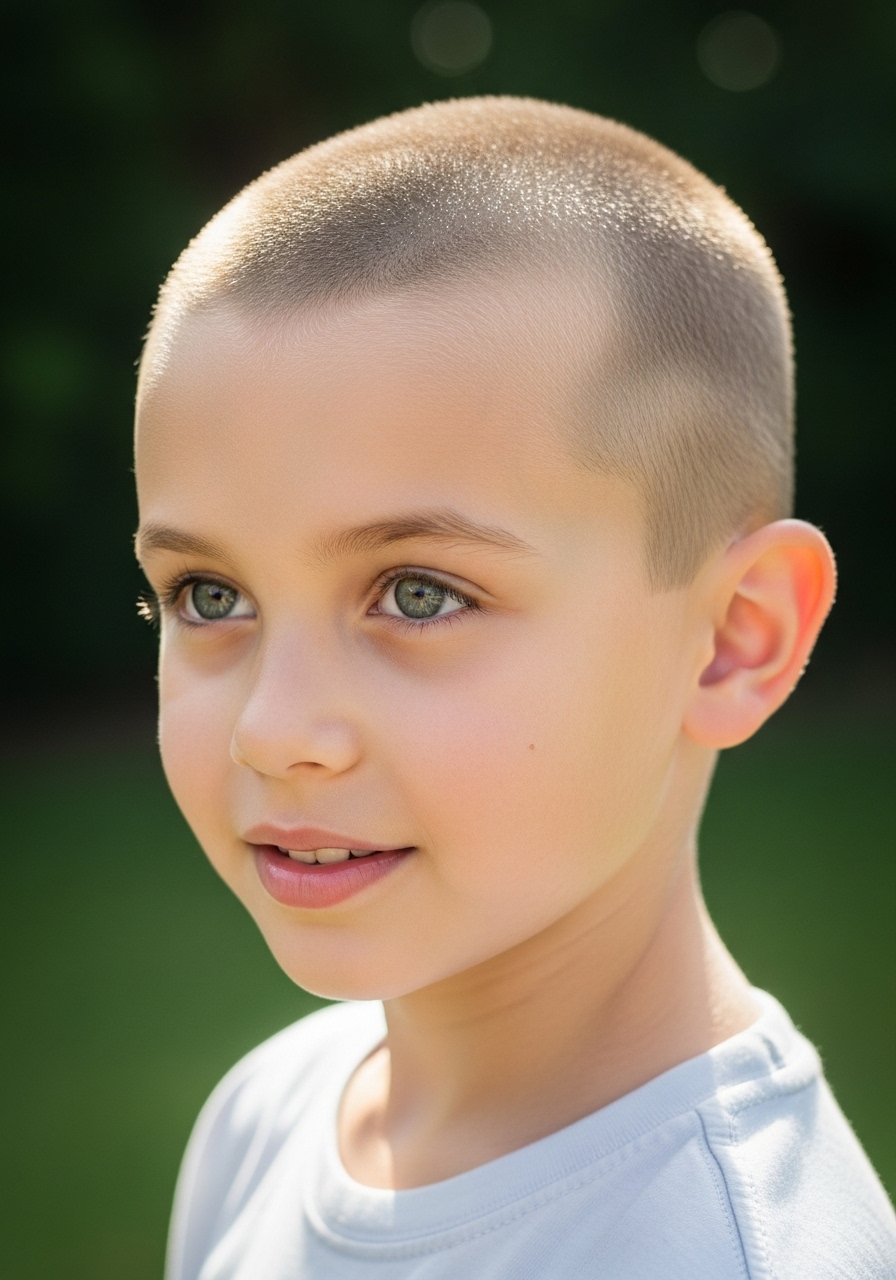
The buzz cut is the ultimate no-fuss short look. It actually works for round faces because it de-emphasizes the cheeks and makes the face look sculpted. Maintenance is a single at-home clipper session every three to six weeks depending on length. Keep sunscreen on exposed scalp and use a gentle shampoo. If you are nervous about clippers, ask a barber for a guide on guard numbers, then practice with a higher guard first. This is an ideal choice for swimmers and very active kids.
Soft Face-Framing Bangs With Short Back For Round Faces
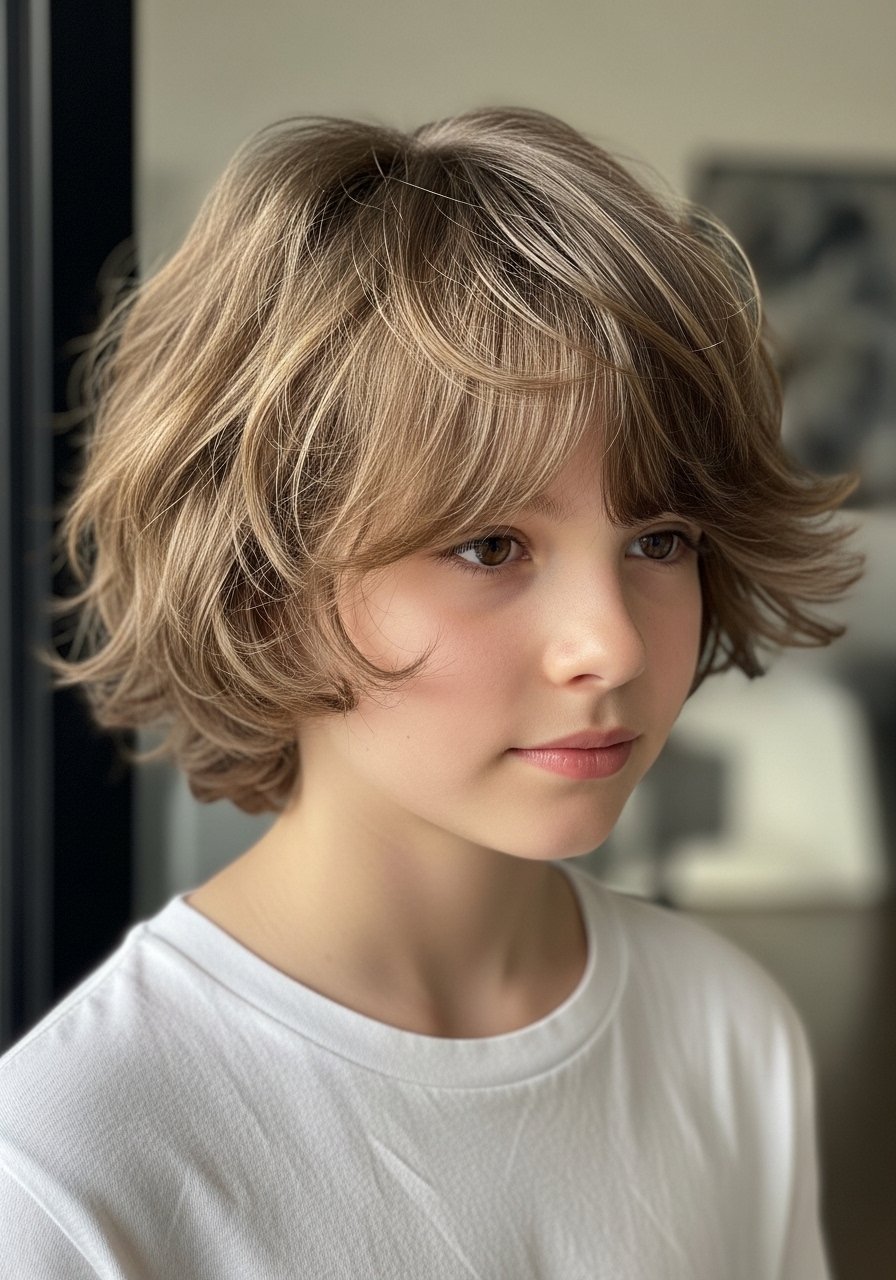
Face-framing bangs that graze the cheekbones add vertical lines to a round face and feel toddler-friendly. They are forgiving on 2A to 3A textures and are easy to style with a quick finger comb. Trim every six weeks to keep length consistent. A mistake I see is parents trimming bangs bluntly across. Instead, trim in small vertical snips to maintain a soft edge. If the child hates bangs, pin them back with a tiny clip for a while. No permanent trimming in a rush before a big event.
What Parents Need To Know Before Choosing Short Hair
- Allergies and scalp sensitivity matter for kids, always do a skin patch test for any color or glitter product
- For any heated tool remember heat protectant before any iron over 300F
- Short hair still needs a trim schedule, plan salon visits or at-home touch-ups every 6 to 10 weeks depending on the cut
- Buy from reputable sellers for premium brands. For Olaplex or K18, buy from the official store on Amazon or pick up at Sephora/Ulta to avoid counterfeits
The Mistakes I Made So You Don’t Have To
- Start with a photo, not a trend. Bring three images to the stylist showing exactly how short you want it
- Don’t over-thin kids hair at the crown. It creates a helmet look when it grows out
- Two little products go further than five half-used ones. A good leave-in and a light styling spray cover most short looks
- Hair grows about half an inch a month at most, regardless of what biotin gummies promise you
- Most heat protectants you spray on dry hair before flat ironing barely work. They need to absorb into damp or just-dried hair to actually shield the cuticle
- If you try at-home trims, cut small amounts. You can always take more off later
Frequently Asked Questions
Q: Can short hair for kids for round face make them look chubbier?
A: The right cut slims rather than widens. Vertical lines, face-framing layers, or a deep side part are your friends. Avoid blunt heavy bangs and one-length bobs that sit at the widest point of the cheeks.
Q: How often should I trim a pixie or short bob on a child?
A: About every six to ten weeks for a pixie and every eight to twelve weeks for a bob depending on how fast their hair grows and how neat you want it. Shorter shapes need more frequent shaping to keep the intended silhouette.
Q: Is temporary color safe for kids?
A: Temporary clip-ins or washable color chalks are safe when used as directed. Always do a skin patch test first. Avoid bleach or permanent dyes on children. If lifting color is needed, visit a salon.
Q: Can I use adult styling products on my child?
A: You can use lightweight adult products for texture or hold, but pick gentle formulations for sensitive scalps. For bond-building treatments like Olaplex No. 3, buy from the official store on Amazon or Sephora to avoid counterfeits and consider professional advice before regular use.
Q: What is the easiest short style for a kid who hates haircuts?
A: The buzz cut or very short crop. They require minimal daily styling and simple trims. If you want softness, a textured crop keeps the look playful without daily fuss.
Q: How do I handle cowlicks and helmet hair in short cuts?
A: Cut slightly longer at the crown and use light texturizer to encourage hair to lay. For helmet hair, keep the sides short and top a touch longer so the shape survives pressure from helmets and hats.