I bleached my own hair in the bathroom sink two winters ago hoping to save money and ended up paying a salon to fix a patchy mess three months later. Short blue hair with side bangs is easier to keep fun than long color, but it has its own mistakes, like over-bleaching the fringe or using the wrong sleep routine. Below are looks and routines that work in real life, with clear warnings about color safety and what to skip.
These ideas are aimed at short cuts from pixie to collarbone, best for low to medium density hair textures and most wavy to straight types with a few notes for finer or thicker hair. Most styles can be done at home in 15 to 45 minutes, with two looks worth booking a salon color appointment. Budget ranges from under $20 to one tool splurge.
Smoky Indigo Pixie With Long Side Bangs
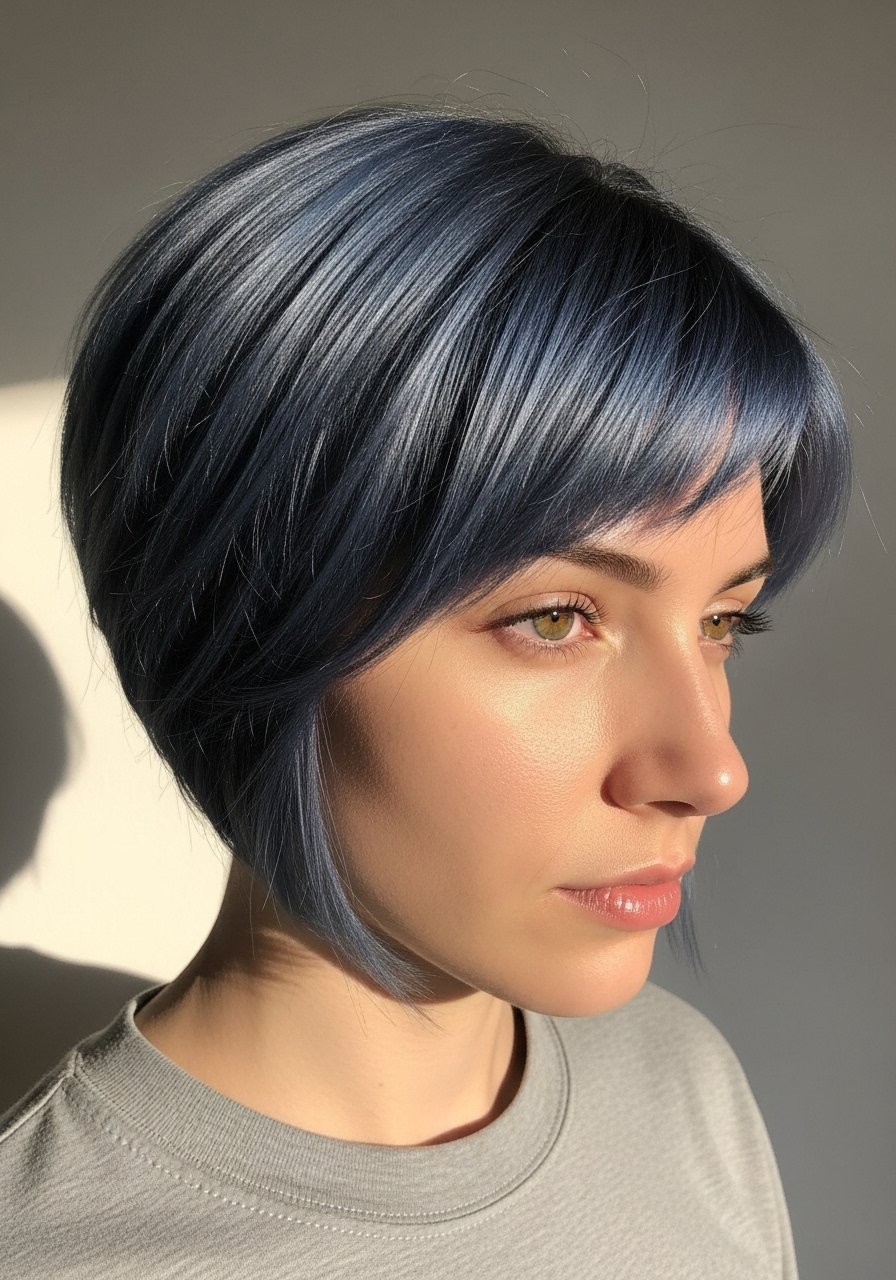
This is the pick when you want punchy color and minimal styling time. The trick is a shadow root about one finger-width deep to make regrowth less obvious and keep the side bangs wearable as they grow out. It fits fine to medium density straight hair and takes five to ten minutes to style with a small amount of styling cream through the bangs. If you need to lift color first, do not bleach over old box dye in one session, it often breaks the hair. For maintenance, two quick at-home toning picks save fading, like a blue-depositing conditioner used weekly, for example overtone-blue-depositing-conditioner. Common mistake, over-smoothing the fringe at high heat. Use a flat iron at 300F or less and always apply a heat protectant before any iron over 300F.
Choppy Crop With Textured Side Fringe
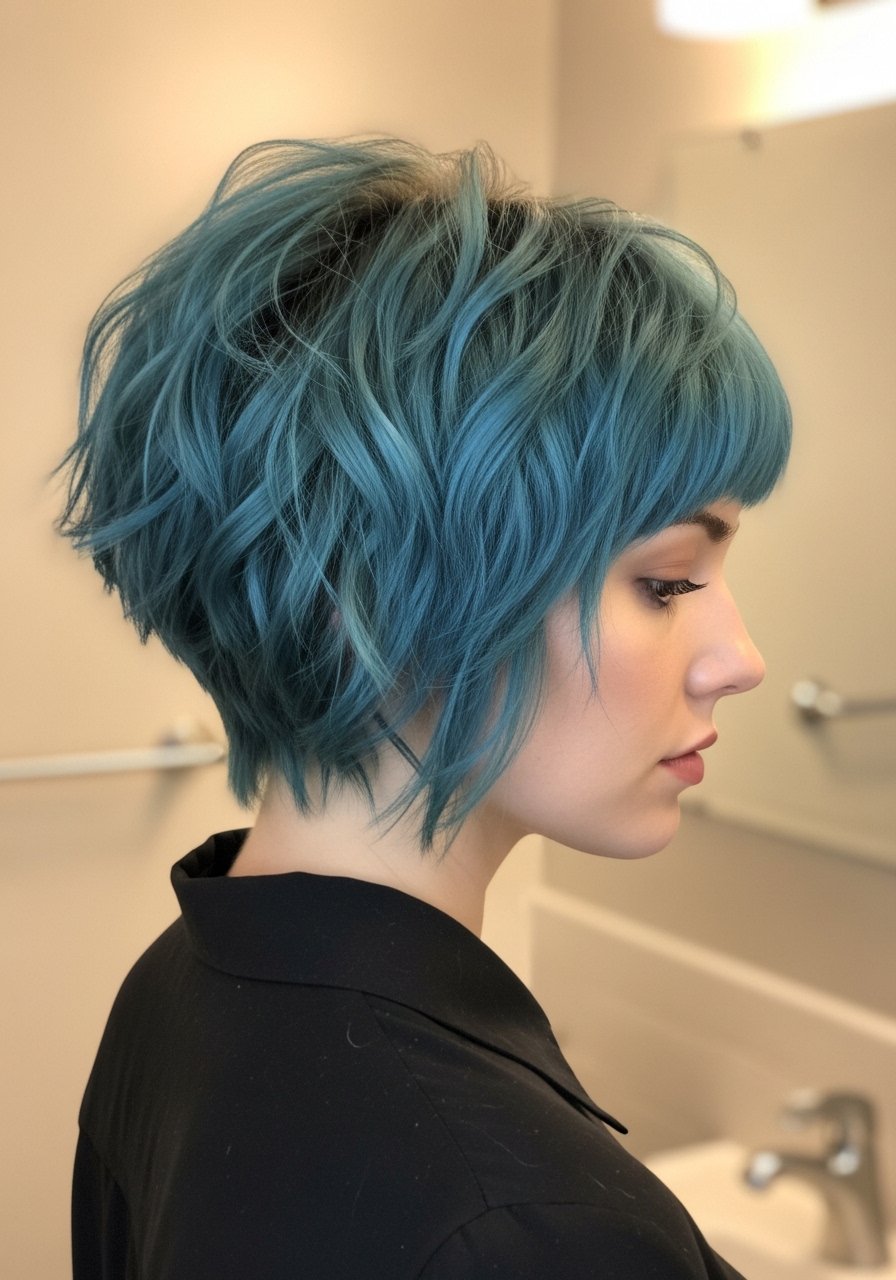
If your hair is naturally wavy, adding choppy layers in the crown and a side fringe avoids that heavy flat bang look. The texturing reduces bulk for thicker waves and gives movement for finer waves. Styling is three to five minutes with a sea salt spray on damp hair and a quick scrunch while diffusing on low heat. Try two light spritzes of Not Your Mother’s Beach Babe Spray to keep separation without stiffness. Many people use too much product, which weighs down short styles. A common fix is one to two sections for the bangs, trimmed to sit at the cheekbone for balance. Salon versus DIY, the cut benefits from a pro for the first texturizing pass, then easy trims at home or with a trusted barber.
Pastel Sky Bob With Side-Swept Bangs
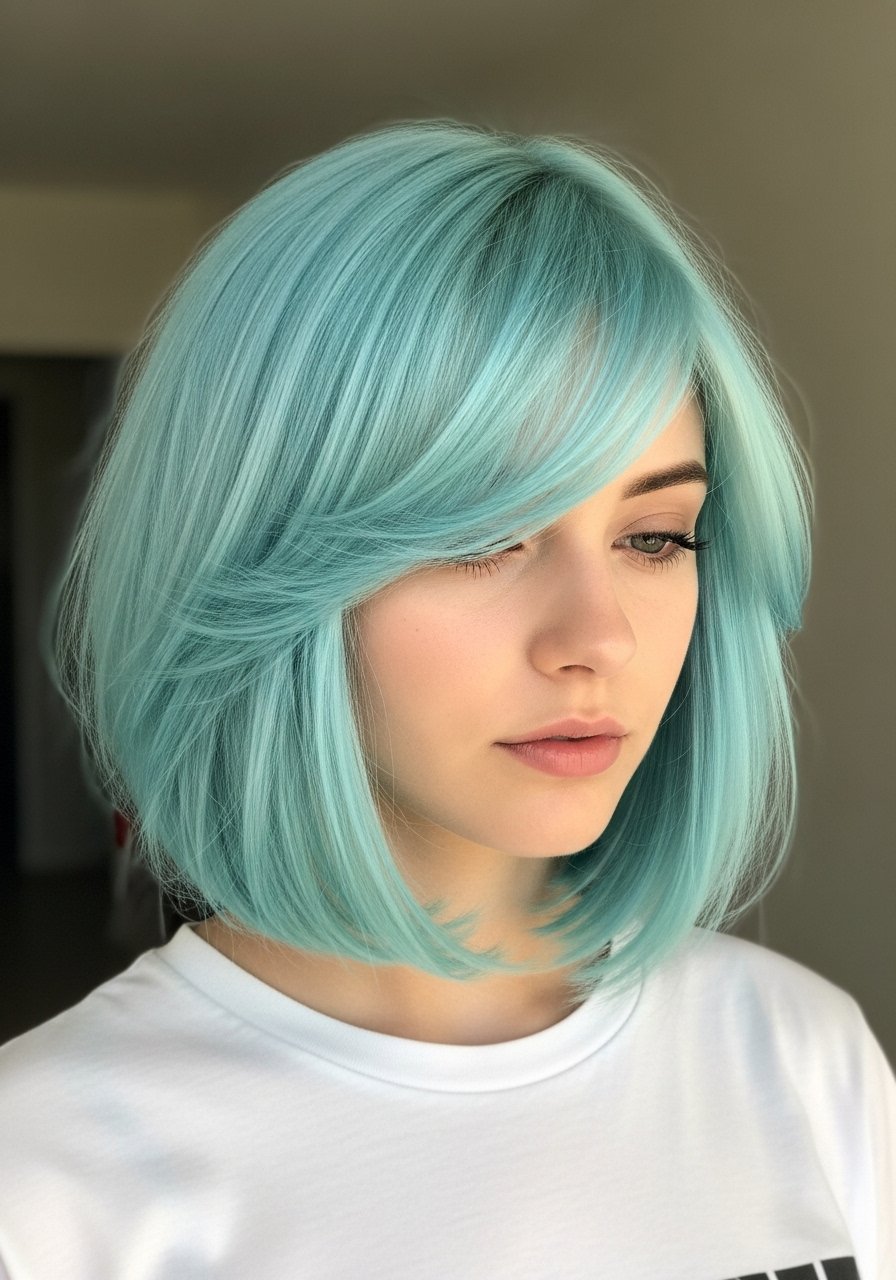
Pastel blue needs lighter base color and more upkeep, but the payoff is a soft, wearable shade that suits fair to medium skin tones. Expect touch-ups every four to six weeks and weekly blue-depositing conditioner use to stretch salon time. For fine hair, keep the bob blunt at the ends to preserve perceived thickness. Two notes most people miss, use a color-depositing mask for five minutes instead of a daily shampoo to keep color and do not shampoo more than three times a week unless you work out daily. If you try to DIY the lift, patch test and accept it may take multiple sessions. To protect fragile hair, use Olaplex No.3 Hair Perfector once a week and buy from the official store on Amazon to avoid counterfeits.
Navy Undercut With Long Side Bang

Undercuts are great if you want bold color but easier upkeep. The shaved area hides regrowth and the long side bang gives an anchor for styling. Works best on medium to thick straight hair, though thinner hair can fake the density by slightly longer top layers. A two-minute styling move is to mist the bang, blow it into place on low, and set with a light hairspray. A mistake I see often is bleaching the shaved side too aggressively. Scalp sensitivity is real, so patch-test and stagger bleaching. Salon is recommended for the initial color and undercut setup, then you can refresh the navy with a color-depositing gloss at home.
Blue Money Piece For Short Bobs

For anyone who loves a face frame without full-head maintenance, a money piece is the trick. It brightens the face and keeps most of the hair lower maintenance. This suits wavy to straight hair and helps round faces by creating a vertical line. The real-life detail other articles skip, apply the lightener only to a narrow 1/2-inch section so the contrast reads intentional but not heavy. Use a blue semi-permanent glaze every two weeks instead of full processing to avoid dryness, I use overtone-blue-depositing-conditioner on those pieces. Mistake to avoid, overlapping bleach on already lifted money pieces causes breakage. If you are unsure, book a color appointment for placement then maintain at home.
Navy Root Melt To Cobalt Ends For Short Shags

A root melt is a forgiving way to wear short blue hair. The blend buys you two to three extra weeks between salon visits and looks lived-in. This is perfect for medium density wavy hair and short shags cut to the ear or jaw. The technique detail that helps, tease a clean 1/4-inch partition at the root and hand-paint the darker shade for a softer gradient. Many try to blur transitions with too much heat. Instead, blend with a comb and a painterly hand. For upkeep, a gloss refresh every four to six weeks is ideal, but you can stretch it with an in-shower color-depositing rinse. Avoid bleaching the same area repeatedly in one day, that is how damage happens.
Heatless Tousled Waves On Short Blue Hair

If your hair frizzes or fades with daily heat, heatless methods are lifesavers. For short blue hair with side bangs, try twisting 1-inch sections into flat twists while hair is damp and sleeping on a silk pillowcase. The process takes under 10 minutes at night and gives tousled waves without color-stripping heat. A specific tip most people miss, twist the bangs away from the face in two sections so they settle soft and not matted. I use a microfiber towel to blot then a pea-size amount of leave-in cream before twisting. If you must use a flat iron for a polished finish, remember to apply a heat protectant before any iron over 300F and set the iron at 300F or less for fine to medium hair.
What I Keep on My Shelf for Short Blue Hair With Side Bangs
- Honestly the one kit I reach for most is small. A silk pillowcase queen size cut my morning frizz and color transfer down, I keep one on every bed
- For weekly repair, Olaplex No.3 Hair Perfector 3.3 oz is an every-other-wash rescue. Buy from the official seller on Amazon or grab it at Sephora to avoid counterfeits
- To stretch salon color, Overtone Blue Conditioner 8 oz used as a mask once a week keeps the tone alive
- For heat days, TRESemme Thermal Creations Heat Tamer Spray 8 oz is affordable and does the job
- For styling, a small ceramic 1-inch flat iron is plenty for shaping short bangs, stay at 300F for fine hair
- For color-safe cleansing, a gentle sulfate-free clarifying shampoo 8 oz once every two to three weeks keeps buildup away without stripping dye
Electric Teal Pixie Undercut With Soft Side Bang

Going bright teal is high maintenance but low effort on a sty l e front. The bright pigments fade fast, so plan to top up every three to four weeks or use color-depositing sprays for touch-ups. This cut reads bold on oval and angular faces because the side bang softens angles. For safety, patch-test dyes for allergy risk and do not overlap bleach over already compromised hair. A cheap trick that works, use a tiny dab of conditioner mixed with a drop of semi-permanent dye and swipe through the fringe to refresh between salon visits. Many people over-wash when color looks dull. Try dry shampoo and a quick mask instead of another shampoo day to preserve pigment.
Gloss Refresh Routine For Short Blue Hair That Fades Fast

If blue fades to a tired halo, a gloss refresh is the most underrated fix. Use a semi-permanent clear or tinted gloss applied for 10 to 15 minutes on clean damp hair to boost shine and tone without additional lifting. For short cuts and side bangs, gloss the fringe first and then the rest of the top layer. A rule I follow, do a patch strand and process times based on how warm your base is; reds and oranges will pull quicker. The common mistake, leaving a gloss on too long thinking it will get more vibrant. It will deposit more, but it can also muddy the final tone. If you are color-correcting at home, start with five minutes and add time as needed. For premium glosses, check Sephora or Ulta if availability on Amazon is limited.
What I Wish Someone Had Told Me About Short Blue Hair With Side Bangs
- Heat protectant belongs on damp or just-dried hair, not dry. Most heat protectants you spray on dry hair before flat ironing barely work. They need to absorb into damp or just-dried hair to actually shield the cuticle. I let a thermal product sit for 60 seconds before I touch hot tools and I notice the difference
- Hair grows about half an inch a month at most, regardless of what biotin gummies promise you. If your bangs are driving you nuts, plan trims on that timeline rather than chasing overnight fixes
- Swap gel-only routines for a lightweight leave-in under a light gel. The leave-in adds slip and the gel locks shape. That swap fixed my second-day texture problems
- If you bleach, always do a strand test and never lift over recent permanent color in one session. If you see a sudden change in elasticity while processing, rinse immediately and book a salon consult
- Use a silk pillowcase and a narrow satin scarf for sleep if you have a money piece or pastel fringe. It reduces color transfer and keeps bangs from flattening
Frequently Asked Questions
Q: How often should I touch up a short blue side bang?
A: Trim frequency depends on how fast your hair grows and how precise you want the shape. Expect a trim every four to six weeks to keep the bang length consistent, especially if it sits at eye level. If you are fine with a softer, feathered look, six to eight weeks is fine.
Q: My blue fades to green. What did I do wrong and how do I fix it?
A: Blue fading to green usually means warm underlying pigments are shifting and the blue pigments left are cooler, making the mix read green. A filler glaze in a cool blue applied for five to ten minutes usually neutralizes the green before a full refresh. Avoid clarifying shampoos right before a color appointment, they can strip unevenly and make corrective color pull oddly.
Q: Can I bleach my bangs at home if the rest of my hair is dark?
A: Bleaching just the bangs is doable but still risky. Do a strand test first and use a lower volume developer to prevent over-processing. Lifting over darker dye is the main reason hair breaks, so if the hair has been colored before, a salon session is the safer choice.
Q: Will a gloss damage my hair?
A: No, a gloss is a deposit-only service and does not chemically lift the hair. It smooths the cuticle and temporarily increases shine. If your hair is brittle already, a gloss will not repair internal damage. Use bond-building treatments weekly and trim split ends when needed.
Q: How do I stop blue dye from staining my pillowcase and clothes?
A: Let the color set for 48 to 72 hours before sleeping on light fabrics. Rinse with cool water until it runs clear and use a color-sealing conditioner. For extra prevention, sleep on a silk pillowcase and wrap bangs in a small satin scarf those first couple nights. If you need to wash, a cold wash and a dedicated dark-laundry cycle protects both the fabric and your color.